Items
Tag
Softness
-
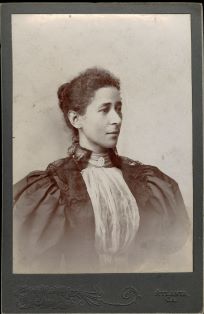 Mrs. H.R. Butler [Selena Sloan Butler]
 -
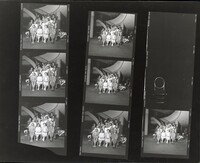 Uncut Negatives These uncut negatives preserve the Utopian Literary Club in the act of continuing. Long after its founding decades, the club still gathered women around books, programs, memory, and mutual regard. The repeated frames suggest something quietly powerful: a group making sure its presence was recorded, not as a relic of an earlier era, but as a living tradition still worthy of the camera.
 -
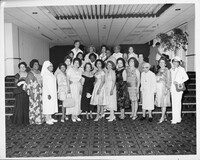 60th Anniversary At the Utopian Literary Club’s 60th anniversary, members dressed in tribute to the decades their organization had lived through. The choice was more than festive; it turned fashion into a timeline of Black women’s endurance, taste, memory, and imagination. By honoring the club’s past through clothing, these women celebrated not only how long Utopian had lasted, but how beautifully it had carried its history forward.
 -
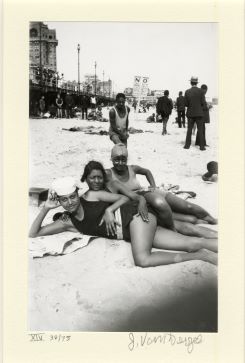 Three women at the beach, undated
 -
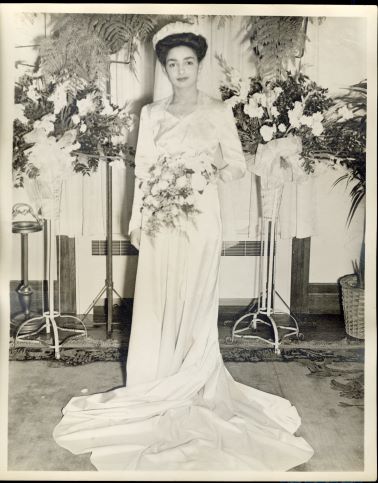 Photo of Carolyn Yancey (Bride)
 -
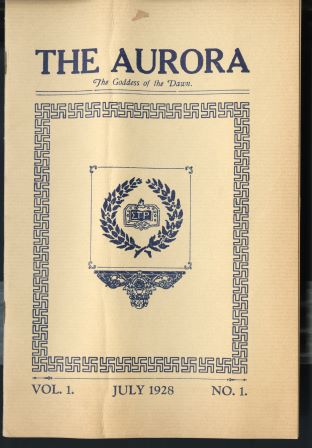 Cover, The Aurora
 -
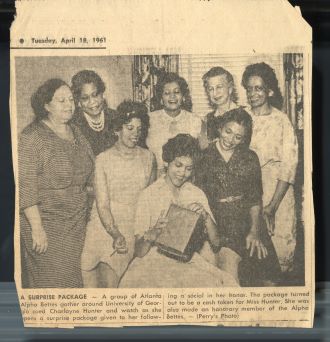 Newspaper Clipping, Alpha-Bettes honor Charlayne A. Hunter, 1961
 -
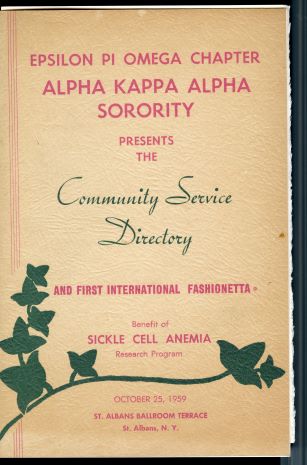 Alpha Kappa Alpha Community Service Directory
 -
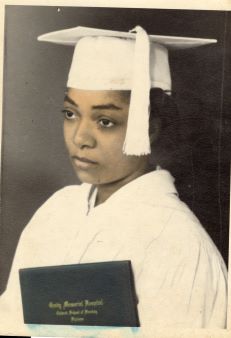 Inetz Cameron Stanley Photographs, Graduation Portrait, 1948
 -
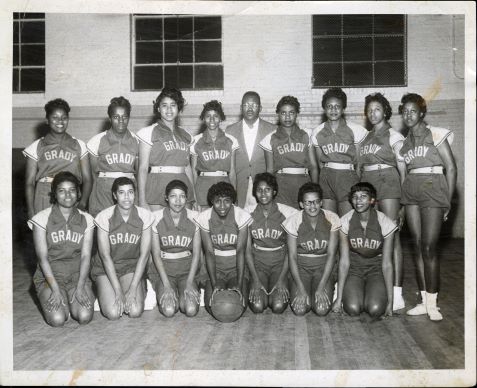 Grady High, ladies basketball, undated
 -
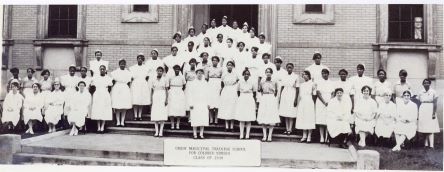 Grady Municipal Training School for Colored Nurses, Class of 1930
 -
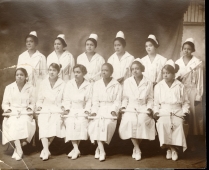 Grady Hosp. School of Nursing Graduation Class of 1923
 -
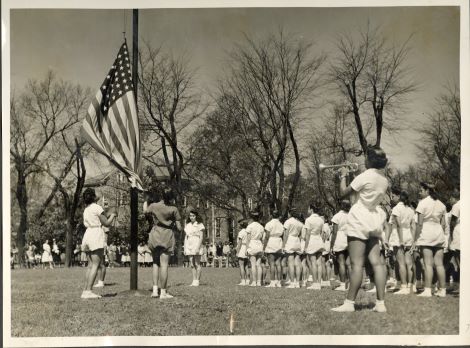 Girls Gym Class Raising Flag, 1943
 -
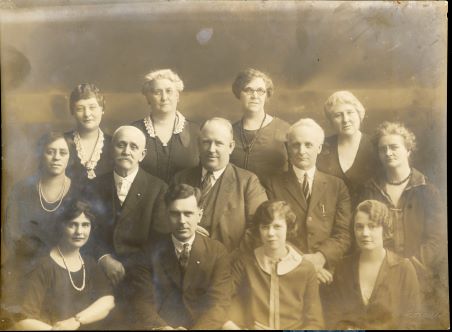 Effie Mitchell with Pharmacy School Graduating Class [#1 left on second row ]
 -
 Dean Jean Fairfax, Tuskegee Institute, Tuskeana Yearbook, 1945 A woman identified as Dean Jean Fairfax sits confidently at her desk in an office setting, likely photographed in 1945 for the yearbook at The Tuskegee Institute. Dressed in a tailored suit with neatly styled hair, she appears composed and professional while surrounded by papers and office materials. The image captures a balance of elegance and authority, reflecting the intellectual labor, leadership, and determination women carried into professional spaces while still maintaining grace and self-possession.
 -
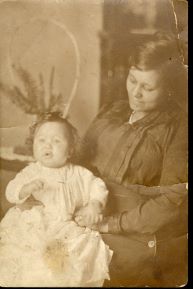 Unidentified baby girl w/ mother, undated A young mother sits holding her infant child in a softly lit studio portrait, likely dating to the 1920s. The mother gazes downward with a calm, attentive expression while the baby looks outward toward the camera. The intimate composition highlights the tenderness of motherhood while also reflecting the quiet endurance, care, and emotional strength required to nurture and protect family during the early twentieth century.
 -
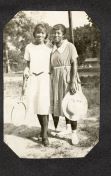 Two unidentified women (one w/ tennis racquet), undated Two African American women stand outdoors beside a tennis racket, dressed in fashionable light-colored dresses and accessories, likely dating to the 1920s. Their poised stance, stylish presentation, and relaxed companionship capture a moment of leisure, confidence, and everyday elegance. The photograph reflects the quiet beauty of Black social life and the importance of recreation, friendship, and self-expression during the early twentieth century.
 -
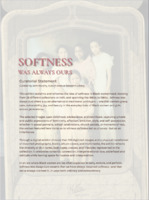 Panel from Exhibit (Curatorial Statement)
 -
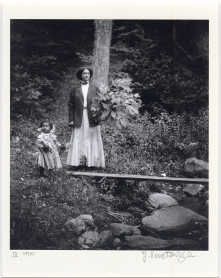 Woman & girl walking by creek Black-and-white photograph depicting a woman and small child standing outdoors beside a narrow wooden plank bridge over a shallow creek. The woman wears a long light-colored dress with a dark jacket and holds a large leafy branch or bouquet. The child stands nearby in a light-colored coat and dark shoes. Trees, rocks, water, and dense foliage surround the figures, creating a reflective natural setting. The image conveys themes of quiet presence, intimacy, dignity, and gentleness within everyday Black life.
 -
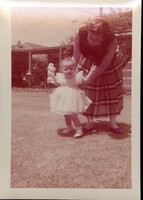 Daughter-in-law (Rheba Butler) and Granddaughter (Darrilyn Selena Butler -holding toy poodle) of Selena Sloan Butler Color photograph of Rheba Butler and her daughter, Darrilyn Selena Butler (granddaughter of Selena Sloan Butler), taken in June 1956. The child, dressed in a light-colored dress, holds a toy poodle while being supported by her mother outdoors on a lawn, capturing a tender family moment.
 -
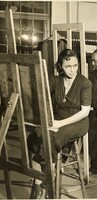 Women in painting class, c. 1940s (2 images) Photographs of two women participating in a painting class, circa 1940s. Each woman works at an easel in a classroom studio, surrounded by art supplies and instructional materials. The scene highlights artistic training, concentration, and creative expression in an educational setting.
 -
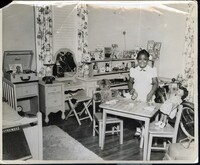 Unidentified Girl Having Tea Party w/ Toys, undated Photograph of an unidentified young girl hosting a tea party with toys, circa 1950s. The girl stands at a small table set with miniature dishes, surrounded by dolls, a teddy bear, and other toys in a neatly arranged bedroom, capturing a moment of imaginative play and childhood.
 -
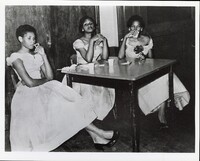 Three Young Ladies in Party Dresses, undated Photograph of three young women seated at a table in party dresses, circa 1950s. The women wear formal evening attire and appear relaxed, holding drinks and socializing, capturing a moment of leisure and youthful elegance.
 -
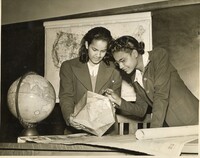 Spelman Students Study World Events, c. 1942 Two students examine a folded map alongside a globe and wall map, reflecting an academic focus on geography and global affairs. The image highlights intellectual engagement and awareness of international issues during the World War II era.
 -
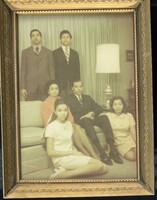 Photograph: Asa G. Yancey and Family in frame, undated Photograph of Asa G. Yancey (seated on sofa next to wife, Carolyn) and family posed for a formal portrait, undated (circa 1960s). Their daughters Caren and Carolyn are seated on the floor. The family is arranged in a living room setting, with two adults seated and children positioned around them, dressed in coordinated, formal attire. The framed image and domestic interior reflect mid-twentieth-century family portrait traditions and a sense of pride, stability, and togetherness.