-
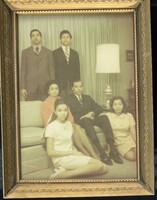
From 1961-62 Scrapbook, Group Photo w/ Coretta Scott King, Atlanta Links Scrapbook page from the 1961–1962 records of the The Links, Incorporated, Atlanta Chapter, featuring a group photograph of chapter members gathered for a chapter event. The page notes the installation of Marge Yancey and the transfer of Coretta Scott King from the Birmingham chapter to the Atlanta chapter.
The photograph shows members seated and standing together in a living room setting, reflecting the social and civic fellowship that characterized the organization’s gatherings. The inclusion of Coretta Scott King highlights the close connections between professional women’s organizations like The Links and the broader civil rights leadership community in Atlanta during the early 1960s.
-
Links in Nassau, Bahamas, Atlanta Daily World Newspaper clipping from the Atlanta Daily World reporting on members of The Links, Incorporated attending a reception in Nassau, Bahamas, during the organization’s 14th National Assembly in 1964. The article includes photographs of visiting members and describes a reception held at the home of Sir Stafford Sands, who welcomed members of the organization.
Among those mentioned is Atlanta Links member Mrs. L. E. Frazier, who attended the assembly and reception. The event highlights the international reach and influence of The Links during the mid-twentieth century, as members engaged in cultural exchange, civic leadership, and social events beyond the United States.
-
Program booklet: Epsilon Pi Omega Chapter, Alpha Kappa Alpha, Community Service Directory and First Annual Fashionetta Program booklet produced by the Alpha Kappa Alpha Sorority, Inc., Epsilon Pi Omega Chapter, for a community event held on October 25, 1959, at the St. Albans Ballroom Terrace in St. Albans, New York. The booklet accompanied the chapter’s Community Service Directory and the First International Fashionetta, a fundraising fashion show organized to benefit sickle cell anemia research.
Fashionetta programs were widely used by Alpha Kappa Alpha chapters as community-based fundraising initiatives that combined fashion, scholarship support, and public service. The event documented in this program reflects the sorority’s commitment to civic engagement, health advocacy, and community uplift during the mid-twentieth century.
-
Photograph: Asa G. Yancey's Daughters Caren & Carolyn, undated Photograph of a group of young girls gathered indoors with two adult women, taken around the 1950s. In the front row, center, are Caren and Carolyn Yancey, daughters of Asa G. Yancey Sr.. The girls are identified as members of “Jack and Jill of America,” a national organization that supports leadership development, cultural awareness, and social engagement for African American children.
The children sit and stand closely together on a sofa and floor, smiling toward the camera, some holding dolls or toys. Two adult women stand behind them, likely supervising the gathering. The setting appears to be a living room, suggesting a social or educational activity organized through the Jack and Jill chapter. The image captures the importance of community networks that nurtured friendship, cultural pride, and leadership among African American youth during the mid-twentieth century.
-
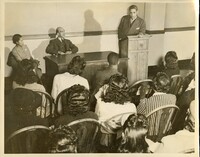
Two Atlanta Links Members at Benjiman E. Mays Banquet Photograph of two members of The Links, Incorporated, Atlanta Chapter, speaking together at a podium during the Benjamin E. Mays Banquet in the 1950s. The women stand close to a microphone, appearing to exchange remarks or present an award. Floral arrangements and banquet tables are visible in the foreground, while other attendees sit nearby.
The event honored Benjamin E. Mays, a prominent leader in African American education and civil rights. The image reflects the role of The Links in supporting educational initiatives, civic engagement, and community leadership within Atlanta’s Black professional community during the mid-twentieth century.
-
Group Photo, Atlanta Links Group portrait of members of the The Links, Incorporated, Atlanta Chapter, photographed during a formal gathering in the 1950s. The women are arranged in several rows in a living room setting, seated on the floor and sofa while others stand behind them. Dressed in elegant evening gowns and cocktail dresses, they present a composed and celebratory image of fellowship and civic leadership.
Founded in 1946, The Links is a national organization of African American professional women dedicated to community service, cultural enrichment, and civic engagement. Photographs like this one document the strong networks of friendship and mutual support that characterized the organization’s early decades, particularly among women leaders in Atlanta’s civic and cultural life.
-
Sigma Gamma Rho Article, The American Front Magazine Magazine page from the June 1947 issue of The American Front Magazine, featuring the “Atlanta Society Front” column. The article reports on several social events within Atlanta’s African American community, including a dance hosted by members of Sigma Gamma Rho Sorority, Inc. as part of a series of National Pan-Hellenic Council activities.
The column describes the event held at the Top Hat club and highlights the participation of members of the National Pan-Hellenic Council and other Black Greek letter organizations. It also references prominent sorority leaders and visiting guests, documenting the vibrant social and civic networks cultivated by Black collegiate organizations during the mid-twentieth century.
-
Nell & Rosemary (granddaughters) Informal outdoor photograph of two young African American girls identified as Nell and Rosemary, granddaughters in the family represented in the Jesse O. Thomas papers, taken in 1945. One child sits in a small wooden chair while the other stands beside her, both wearing light-colored dresses and ankle socks. The photograph was taken in the yard beside a wooden house, with the porch and screen door visible behind them.
The candid composition captures a quiet moment of childhood and family life. Images like this document everyday experiences within African American families during the mid-twentieth century, preserving memories of children, home environments, and intergenerational relationships.
-
Elliot Travis's Twins, Laura & Louise at Delta Pro [Delta Sigma Theta Sorority], West Virginia State College Outdoor photograph of twins Laura and Louise Travis, students at West Virginia State College, standing side by side during Delta Pro activities in 1936. The young women are dressed in long coats over light-colored dresses and each holds a small bouquet of flowers, indicating their participation as new probationary members (“Delta Pro”) of Delta Sigma Theta Sorority.
The sisters pose together on the campus lawn with college buildings and hills visible in the distance. Their matching posture and similar attire highlight both their twin relationship and the sense of unity associated with sorority initiation traditions. The photograph reflects moments of friendship, sisterhood, and collegiate life among African American women during the 1930s.
-
Deltas on Pro [Delta Sigma Theta Sorority] (Louise Maxwell and group), West Virginia State College Outdoor photograph of four young African American women standing on the campus of West Virginia State College in 1936. The women are newly initiated members on probation (“Pro”) in the Delta Sigma Theta Sorority, including Louise Maxwell and three fellow sorority sisters. Each woman holds a bouquet of flowers and wears a light-colored dress with a dark jacket, standing side-by-side on the lawn with campus buildings visible in the background.
The image documents an early stage of sorority membership, when new initiates participated in ceremonies and campus traditions marking their entry into the sisterhood. Their coordinated attire, flowers, and formal posture suggest a celebratory moment tied to initiation activities and the welcoming of new members into the organization’s collegiate community.
-
Miss West Virginia & Court Outdoor portrait of three young African American women seated together on a stone bench in front of a brick school building in 1936. The women are identified as members of the Miss West Virginia court: Eddie Mae Stubbs (left), Dot Bradshaw (center, Miss West Virginia), and Violet Burks (right). They sit close together, smiling toward the camera, dressed in fashionable mid-1930s dresses with softly waved hairstyles typical of the period.
The photograph captures a moment of camaraderie and pride among the young women during a community pageant event. Informal yet composed, the image reflects the social networks and celebratory traditions that brought young Black women together through school, community events, and local recognition.
-
Nell Thomas & Anne Braxton Hand-tinted studio portrait of an African American family group taken around 1930. Nell Thomas sits in the center, surrounded by four young women, including her daughter Anne Braxton, who stands third from the left. The women wear light-colored dresses typical of the late 1920s and early 1930s, and the photograph has been delicately hand-colored to highlight their clothing and skin tones.
The carefully posed composition and decorative studio mount reflect the importance of family portraiture within African American communities. Images like this celebrated kinship, pride, and generational connection, preserving moments of unity and affection across mothers and daughters.
-
Margaret Bowen with other Alpha Kappa Alpha Members, University of Cincinnati, 1922 Group portrait of African American women affiliated with the Alpha Kappa Alpha Sorority, Inc. at the University of Cincinnati in 1922. The photograph includes Margaret Bowen (front row, left) seated among fellow members of the Omicron Chapter. The women are arranged in a studio setting, seated and standing around a small table, dressed in fashionable early-1920s attire including tailored dresses, necklaces, and carefully styled hair.
The portrait reflects the importance of Black sororities as spaces of sisterhood, scholarship, and leadership for African American women in higher education during the early twentieth century. Through organizations like Alpha Kappa Alpha, college-educated Black women built networks of mutual support while advancing academic achievement, civic engagement, and community uplift.
-
Lugenia Burns Hope and Georgia Club Women Group portrait of African American clubwomen gathered outside a building in the 1920s. The photograph includes prominent civic leaders Lugenia Burns Hope, seated in the front row center, and Selena Sloan Butler standing to her right. The women are dressed in tailored dresses, coats, and hats typical of the period, reflecting the dignity and professionalism of Black women engaged in community leadership.
Images like this document the powerful networks of African American clubwomen who organized for education, social reform, and community uplift during the early twentieth century. Their collective efforts shaped civic institutions, expanded opportunities for Black families, and strengthened movements for racial advancement across the United States.
-
Sigma Gamma Rho Sorority - Beta, Gamma and Delta Chapters, The Aurora, 1928 Pages from the 1928 issue of The Aurora, the official magazine of Sigma Gamma Rho Sorority, Inc., featuring photographs and reports from several collegiate chapters. The pages highlight members of the Beta, Gamma, and Delta chapters, including group portraits of sorors posed together and accompanied by captions identifying individual members and officers. The articles describe chapter activities, leadership roles, scholarship initiatives, and social events organized by members.
These images and texts document the early growth of the sorority and the important role African American women played in higher education, professional development, and community leadership during the 1920s. The photographs capture the pride, camaraderie, and intellectual engagement of young Black women building networks of sisterhood and service in the early twentieth century.
-
Young Woman on Stairs Portrait of a young African American woman standing on a staircase, photographed around 1943. She smiles warmly toward the camera while resting one hand on the banister. The woman wears a belted dress with long sleeves, a decorative necklace, bracelets, and a stylish feathered hat. Her confident pose and fashionable attire highlight the elegance and self-expression of African American women during the 1940s, capturing a moment of everyday sophistication within a domestic setting.
-
Young girl dressed up and sitting on decorated chair, undated Portrait of a young African American girl seated on a decorated chair, photographed around the 1950s. The child is dressed in a frilly formal dress with lace trim, white socks, and Mary Jane shoes. A headband adorns her hair, and she smiles gently toward the camera. The carefully arranged outfit and decorative chair suggest the photograph was taken for a special occasion or formal portrait. The image reflects the pride families took in presenting their children with care, elegance, and celebration during mid-twentieth-century African American family life.
-
Woman standing, wearing feather and jeweled hat and dress, undated Studio portrait of an African American woman standing in an elaborately styled outfit, photographed in the mid-1920s by James Van Der Zee. The woman wears a dramatic feathered headdress and a jeweled headpiece, paired with a richly decorated dress adorned with beads, chains, and metallic embellishments. She poses confidently with one hand on her hip against a painted studio backdrop. The striking costume and theatrical styling reflect the glamour, creativity, and expressive fashion associated with the Harlem Renaissance era, a period when portrait photography celebrated individuality, elegance, and cultural pride.
-
Woman reading Studio portrait of an African American woman seated and reading a document, photographed in the early 1910s by James Van Der Zee. The woman wears an elaborately decorated dress with lace details, gloves, and a pendant necklace. She sits within a carefully arranged interior featuring patterned wallpaper, framed landscape paintings, and decorative plants. Her composed posture and refined surroundings emphasize dignity, education, and social status. Van Der Zee’s attention to interior design and personal presentation reflects the aspirations and cultural sophistication of African American communities during the early twentieth century.
-
Woman Playing Piano Black-and-white portrait of an African American woman seated at a piano, photographed around 1943. The woman is shown in profile, her hands poised on the keys as she plays. She wears a sleeveless dress and small earrings, her hair styled neatly back from her face. The photograph captures a quiet moment of concentration and artistry, highlighting the role of music, cultural expression, and refinement in African American life during the mid-twentieth century.
-
Unidentified woman, undated Studio portrait of an African American woman seated beside a small table, photographed between approximately 1912 and 1916. She rests her head lightly on her hand while an open book sits on the table beside her, suggesting a quiet moment of reading or reflection. The woman wears a light-colored dress, lace gloves, and a textured cloche-style hat adorned with a flower. A delicate handbag hangs from her wrist. Her composed posture and fashionable attire reflect the grace, intellect, and self-presentation of African American women in the early twentieth century.
-
Unidentified Woman in Shawl, 1926 Sepia studio portrait of an African American woman standing in a doorway wearing a shawl and a fringed dress, photographed in Atlanta in 1926. The inscription on the photograph reads, “To our son from your devoted mother, November 1, 1926.” The woman may be Selena Sloan Butler, though this identification is not confirmed. The portrait reflects the dignity, style, and familial devotion expressed through formal portrait photography in early twentieth-century African American communities.
-
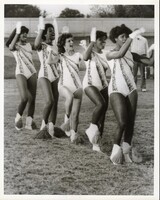
Unidentified school pageant group, undated Photograph of a group of African American teenage girls participating in a school pageant, circa 1960s. The young women wear formal gowns, gloves, and pageant sashes while holding bouquets. At center, a crowned participant sits wearing a cape and holding flowers, surrounded by other contestants. The image reflects the pageantry, celebration of beauty, and ceremonial traditions that highlighted confidence, accomplishment, and community pride among African American youth during the mid-twentieth century.
-
Unidentified Girl Next to Chair, undated Cabinet card studio portrait of an unidentified young African American girl standing beside an upholstered chair, photographed in Atlanta in the 1890s. The child wears a long, lace-trimmed dress and holds a small bouquet, posed formally against a studio backdrop. The image reflects the traditions of childhood portraiture and the importance of documenting family life and respectability in African American communities in the late nineteenth century. The child may possibly be Selena Sloan Butler as a young girl, though this identification is not confirmed.
-
Unidentified Girl in Formal Attire, undated Cabinet card studio portrait of an unidentified young African American girl dressed in formal attire, circa 1880s. The child wears a long, decorative dress with lace details and holds a small bouquet, posed before a painted studio backdrop. The photograph reflects the importance of portraiture and formal dress in documenting family pride, childhood, and social presentation within African American communities during the late nineteenth century.