Items
Tag
African American Children
-
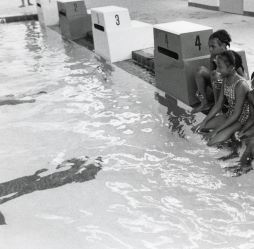 Children Swimming in pool (4 of 5)
 -
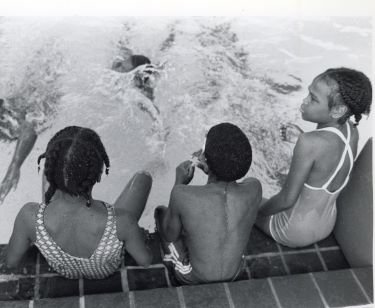 Children Swimming in pool (1 of 5)
 -
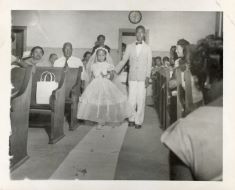 Mock Wedding (Children)
 -
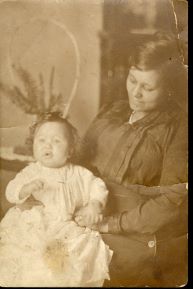 Unidentified baby girl w/ mother, undated A young mother sits holding her infant child in a softly lit studio portrait, likely dating to the 1920s. The mother gazes downward with a calm, attentive expression while the baby looks outward toward the camera. The intimate composition highlights the tenderness of motherhood while also reflecting the quiet endurance, care, and emotional strength required to nurture and protect family during the early twentieth century.
 -
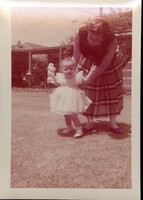 Daughter-in-law (Rheba Butler) and Granddaughter (Darrilyn Selena Butler -holding toy poodle) of Selena Sloan Butler Color photograph of Rheba Butler and her daughter, Darrilyn Selena Butler (granddaughter of Selena Sloan Butler), taken in June 1956. The child, dressed in a light-colored dress, holds a toy poodle while being supported by her mother outdoors on a lawn, capturing a tender family moment.
 -
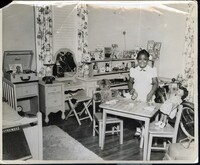 Unidentified Girl Having Tea Party w/ Toys, undated Photograph of an unidentified young girl hosting a tea party with toys, circa 1950s. The girl stands at a small table set with miniature dishes, surrounded by dolls, a teddy bear, and other toys in a neatly arranged bedroom, capturing a moment of imaginative play and childhood.
 -
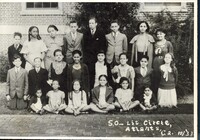 Anne Thomas in Soc-Lit Circle, 1933 Group photograph of members of the Soc-Lit (Social–Literary) Circle in Atlanta, Georgia, dated October 1933. The image shows a large group of children and adolescents arranged in three rows outdoors in front of a brick building. The group includes boys and girls dressed in formal or semi-formal clothing typical of the early 1930s, including suits, dresses, and hair bows. Anne Thomas, identified in the caption data as having long curls, appears in the back row, second from the left. Social and literary circles such as this were common community and youth organizations in African American communities during the early twentieth century. These groups often fostered reading, public speaking, social development, and intellectual engagement among young people. The photograph documents youth participation in organized educational and cultural activities in Atlanta during the Great Depression era.
 -
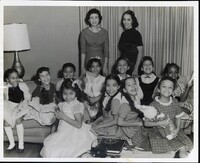 Photograph: Asa G. Yancey's Daughters Caren & Carolyn (Center, Front), undated Photograph of a group of young girls gathered indoors with two adult women, taken around the 1950s. In the front row, center, are Caren and Carolyn Yancey, daughters of Asa G. Yancey Sr.. The girls are identified as members of “Jack and Jill of America,” a national organization that supports leadership development, cultural awareness, and social engagement for African American children. The children sit and stand closely together on a sofa and floor, smiling toward the camera, some holding dolls or toys. Two adult women stand behind them, likely supervising the gathering. The setting appears to be a living room, suggesting a social or educational activity organized through the Jack and Jill chapter. The image captures the importance of community networks that nurtured friendship, cultural pride, and leadership among African American youth during the mid-twentieth century.
 -
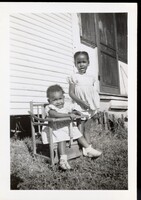 Nell & Rosemary (granddaughters) Informal outdoor photograph of two young African American girls identified as Nell and Rosemary, granddaughters in the family represented in the Jesse O. Thomas papers, taken in 1945. One child sits in a small wooden chair while the other stands beside her, both wearing light-colored dresses and ankle socks. The photograph was taken in the yard beside a wooden house, with the porch and screen door visible behind them. The candid composition captures a quiet moment of childhood and family life. Images like this document everyday experiences within African American families during the mid-twentieth century, preserving memories of children, home environments, and intergenerational relationships.
 -
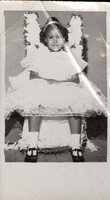 Young girl dressed up and sitting on decorated chair, undated Portrait of a young African American girl seated on a decorated chair, photographed around the 1950s. The child is dressed in a frilly formal dress with lace trim, white socks, and Mary Jane shoes. A headband adorns her hair, and she smiles gently toward the camera. The carefully arranged outfit and decorative chair suggest the photograph was taken for a special occasion or formal portrait. The image reflects the pride families took in presenting their children with care, elegance, and celebration during mid-twentieth-century African American family life.
 -
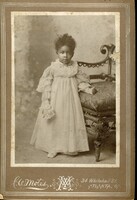 Unidentified Girl Next to Chair, undated Cabinet card studio portrait of an unidentified young African American girl standing beside an upholstered chair, photographed in Atlanta in the 1890s. The child wears a long, lace-trimmed dress and holds a small bouquet, posed formally against a studio backdrop. The image reflects the traditions of childhood portraiture and the importance of documenting family life and respectability in African American communities in the late nineteenth century. Based on the photograph’s presence in the Selena Sloan Butler Papers and the apparent age of the sitter, the girl may possibly be Selena Sloan Butler, though this identification has not been confirmed.
 -
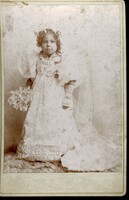 Unidentified Girl in Formal Attire, undated Cabinet card studio portrait of an unidentified young African American girl dressed in formal attire, circa 1880s. The child wears a long, decorative dress with lace details and holds a small bouquet, posed before a painted studio backdrop. The photograph reflects the importance of portraiture and formal dress in documenting family pride, childhood, and social presentation within African American communities during the late nineteenth century.