A woman identified as Dean Jean Fairfax sits confidently at her desk in an office setting, likely photographed in 1945 for the yearbook at The Tuskegee Institute. Dressed in a tailored suit with neatly styled hair, she appears composed and professional while surrounded by papers and office materials. The image captures a balance of elegance and authority, reflecting the intellectual labor, leadership, and determination women carried into professional spaces while still maintaining grace and self-possession.
A young mother sits holding her infant child in a softly lit studio portrait, likely dating to the 1920s. The mother gazes downward with a calm, attentive expression while the baby looks outward toward the camera. The intimate composition highlights the tenderness of motherhood while also reflecting the quiet endurance, care, and emotional strength required to nurture and protect family during the early twentieth century.
Two African American women stand outdoors beside a tennis racket, dressed in fashionable light-colored dresses and accessories, likely dating to the 1920s. Their poised stance, stylish presentation, and relaxed companionship capture a moment of leisure, confidence, and everyday elegance. The photograph reflects the quiet beauty of Black social life and the importance of recreation, friendship, and self-expression during the early twentieth century.
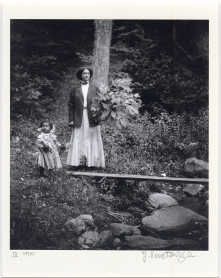
Black-and-white photograph depicting a woman and small child standing outdoors beside a narrow wooden plank bridge over a shallow creek. The woman wears a long light-colored dress with a dark jacket and holds a large leafy branch or bouquet. The child stands nearby in a light-colored coat and dark shoes. Trees, rocks, water, and dense foliage surround the figures, creating a reflective natural setting. The image conveys themes of quiet presence, intimacy, dignity, and gentleness within everyday Black life.
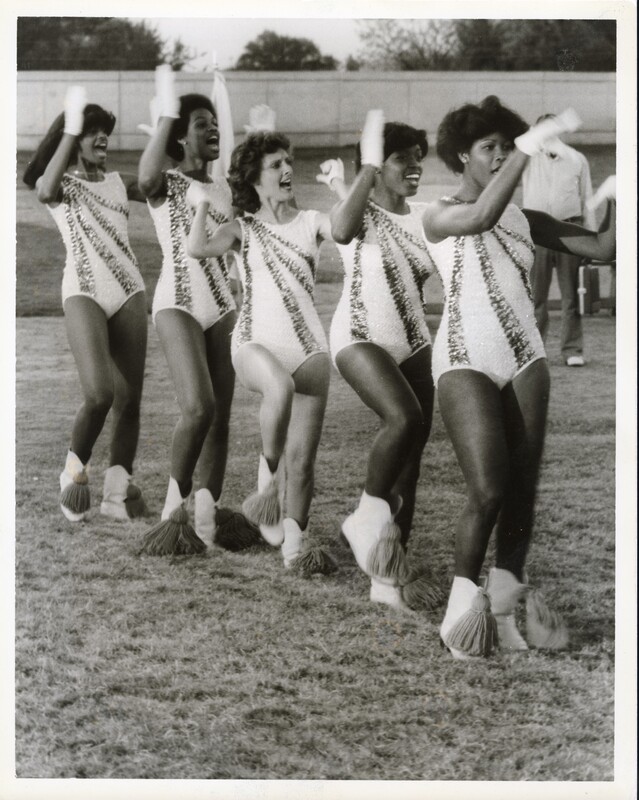
Photograph of the Albany State College drill team performing, dated October 27, 1979. A line of young women in coordinated uniforms executes a synchronized routine on a field, capturing movement, precision, and school spirit.
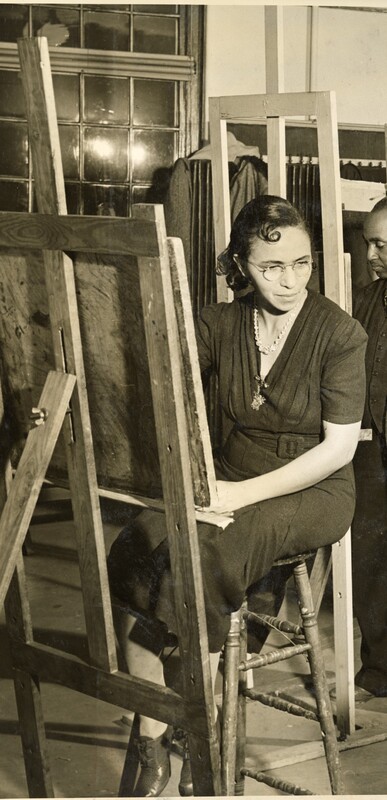
Photographs of two women participating in a painting class, circa 1940s. Each woman works at an easel in a classroom studio, surrounded by art supplies and instructional materials. The scene highlights artistic training, concentration, and creative expression in an educational setting.
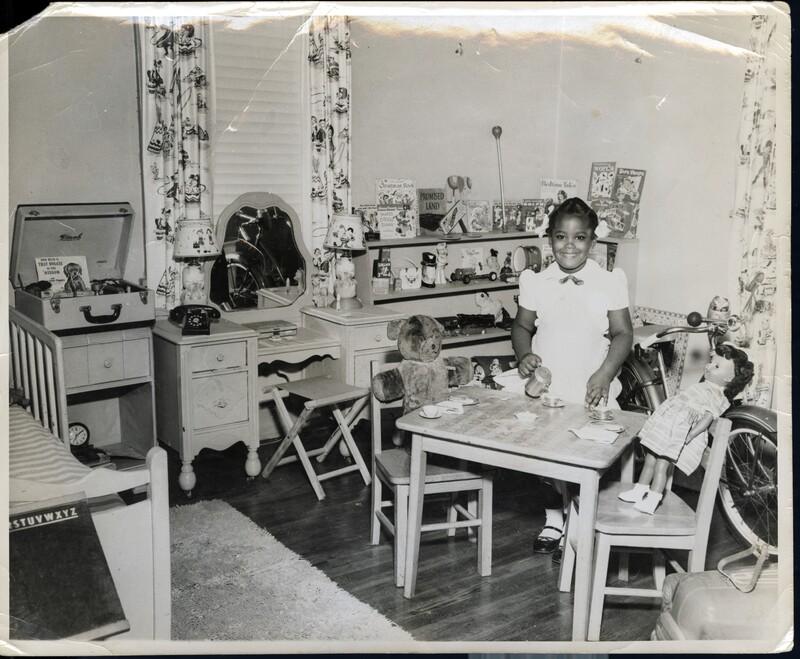
Photograph of an unidentified young girl hosting a tea party with toys, circa 1950s. The girl stands at a small table set with miniature dishes, surrounded by dolls, a teddy bear, and other toys in a neatly arranged bedroom, capturing a moment of imaginative play and childhood.
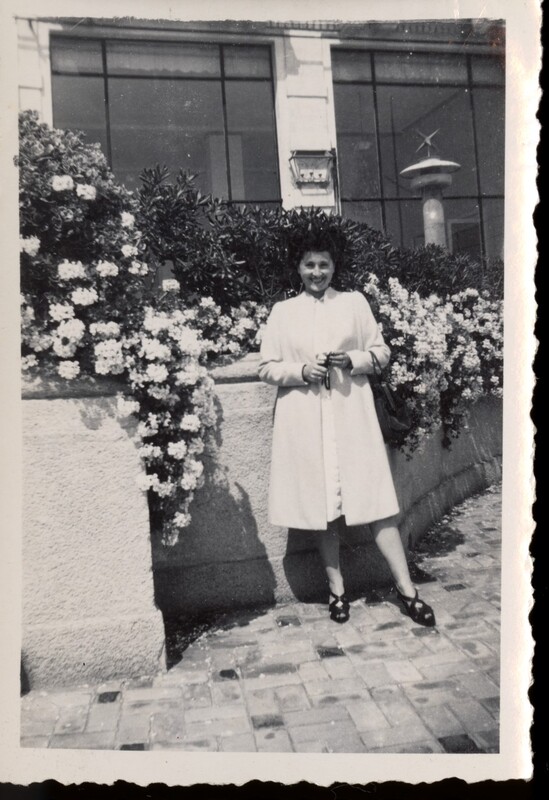
Series of photographs of Madeleine Berthelot taken during a visit to the French Riviera in May 1946. The images show Berthelot posing in front of prominent locations including the Hotel Ruhl in Nice, the Promenade des Anglais, and the Hotel Martinez in Cannes. Her tailored coat, handbag, and composed stance reflect postwar fashion and the culture of travel along the Mediterranean coast in the immediate aftermath of World War II.
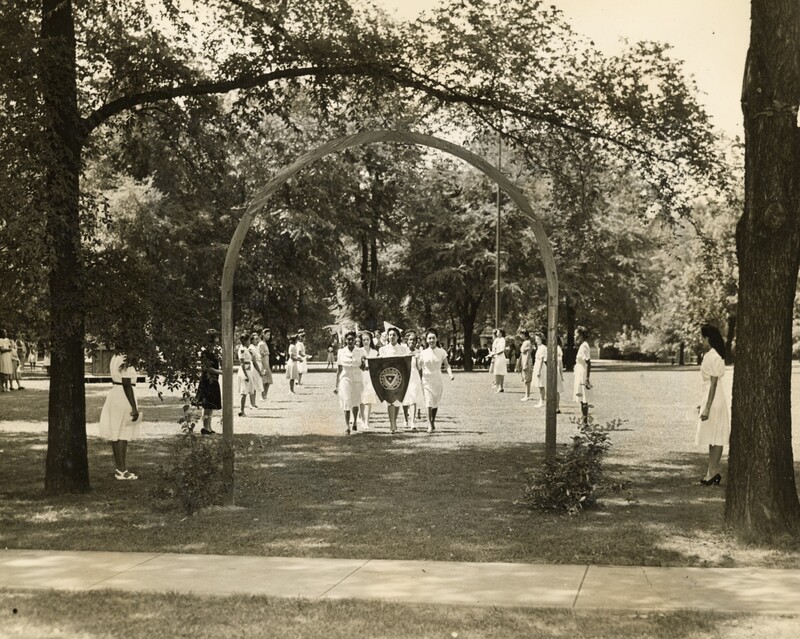
Photograph showing four graduating students from Spelman College leading a commencement procession from Sisters Chapel, circa 1940. The students walk together carrying a banner bearing the college emblem while other participants stand along the pathway observing the ceremony. The procession moves beneath a wooden arch on the college grounds, framed by trees and landscaped lawns.
The students wear light-colored dresses typical of formal collegiate ceremonies of the period. Processions such as this were a traditional part of commencement exercises at Spelman College, marking the formal transition of students from academic study to professional and civic life. Founded in 1881, Spelman College has long been one of the nation’s leading historically Black colleges for women, educating generations of African American leaders in education, public service, and the arts.
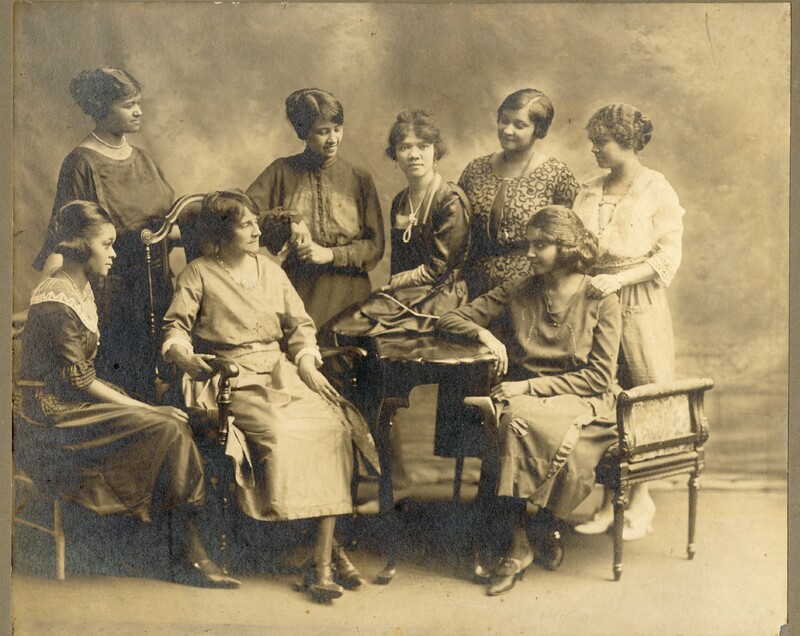
Group portrait of African American women affiliated with the Alpha Kappa Alpha Sorority, Inc. at the University of Cincinnati in 1922. The photograph includes Margaret Bowen (front row, left) seated among fellow members of the Omicron Chapter. The women are arranged in a studio setting, seated and standing around a small table, dressed in fashionable early-1920s attire including tailored dresses, necklaces, and carefully styled hair.
The portrait reflects the importance of Black sororities as spaces of sisterhood, scholarship, and leadership for African American women in higher education during the early twentieth century. Through organizations like Alpha Kappa Alpha, college-educated Black women built networks of mutual support while advancing academic achievement, civic engagement, and community uplift.
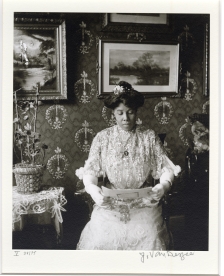
Studio portrait of an African American woman seated and reading a document, photographed in the early 1910s by James Van Der Zee. The woman wears an elaborately decorated dress with lace details, gloves, and a pendant necklace. She sits within a carefully arranged interior featuring patterned wallpaper, framed landscape paintings, and decorative plants. Her composed posture and refined surroundings emphasize dignity, education, and social status. Van Der Zee’s attention to interior design and personal presentation reflects the aspirations and cultural sophistication of African American communities during the early twentieth century.
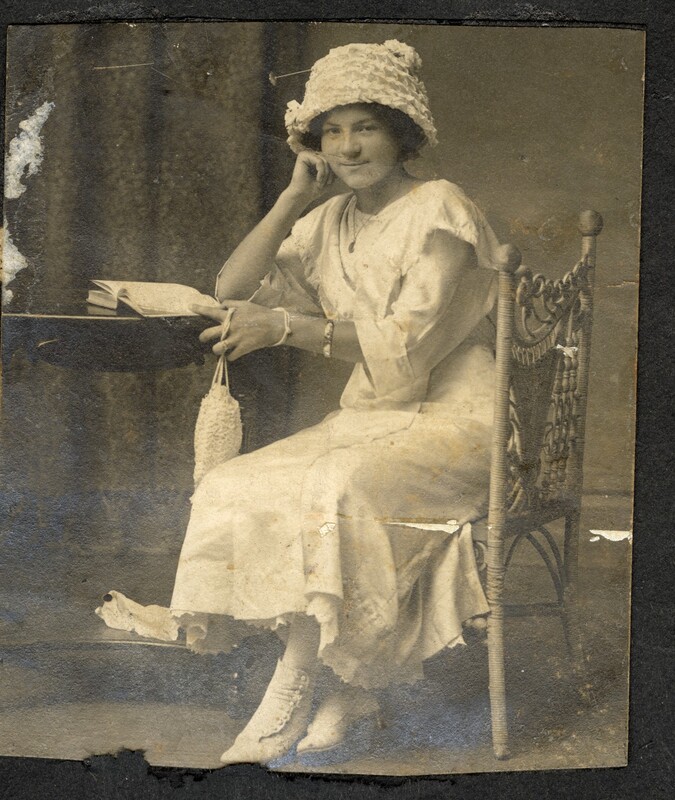
Studio portrait of an African American woman seated beside a small table, photographed between approximately 1912 and 1916. She rests her head lightly on her hand while an open book sits on the table beside her, suggesting a quiet moment of reading or reflection. The woman wears a light-colored dress, lace gloves, and a textured cloche-style hat adorned with a flower. A delicate handbag hangs from her wrist. Her composed posture and fashionable attire reflect the grace, intellect, and self-presentation of African American women in the early twentieth century.
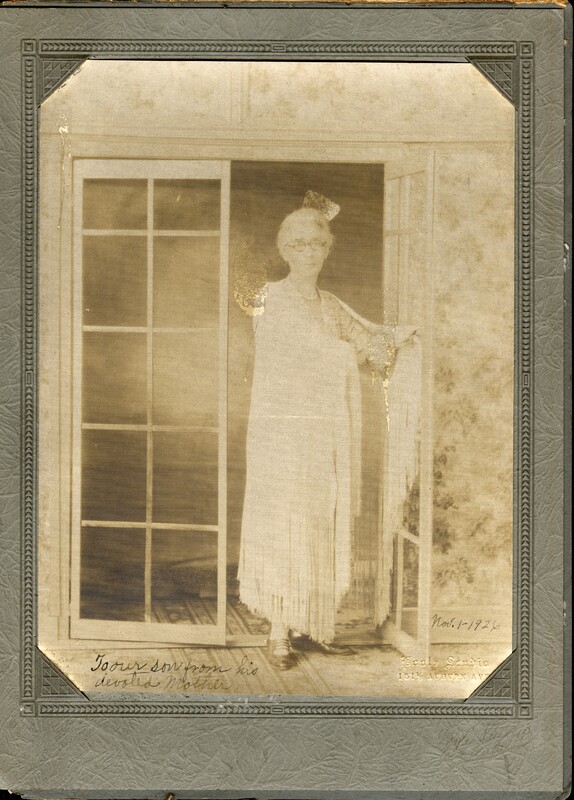
Sepia studio portrait of an African American woman standing in a doorway wearing a shawl and a fringed dress, photographed in Atlanta in 1926. The inscription on the photograph reads, “To our son from your devoted mother, November 1, 1926.” The woman may be Selena Sloan Butler, though this identification is not confirmed. The portrait reflects the dignity, style, and familial devotion expressed through formal portrait photography in early twentieth-century African American communities.
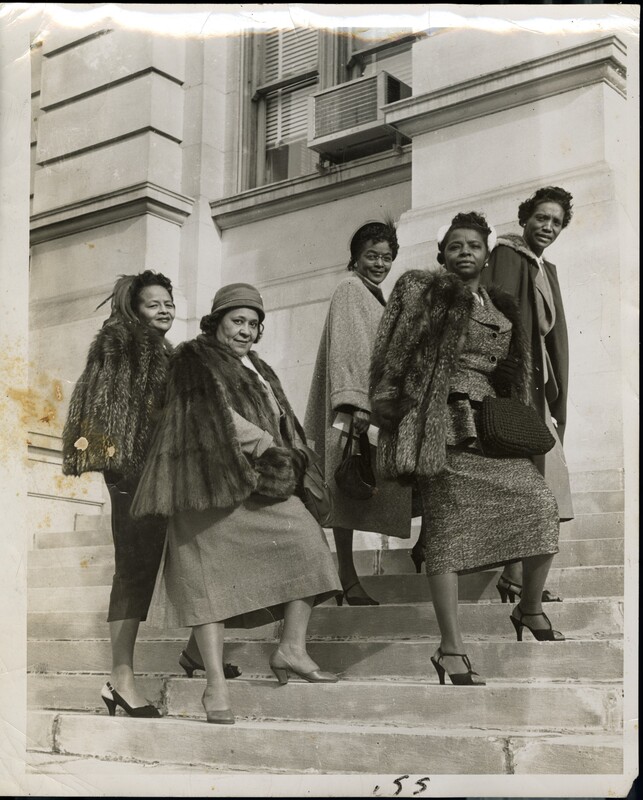
Group portrait of five African American women standing on the steps of a public building, photographed in 1955. From left to right are Mrs. Lula Cornelius, Mrs. Lillie Sanders, Mrs. John Taylor, Mrs. Mamie Render, and Ruby Blackburn. The women are dressed in fashionable coats, fur stoles, and heeled shoes, reflecting the style, dignity, and social presence of Black women in mid-twentieth-century community and civic life.