Two African American women stand outdoors beside a tennis racket, dressed in fashionable light-colored dresses and accessories, likely dating to the 1920s. Their poised stance, stylish presentation, and relaxed companionship capture a moment of leisure, confidence, and everyday elegance. The photograph reflects the quiet beauty of Black social life and the importance of recreation, friendship, and self-expression during the early twentieth century.
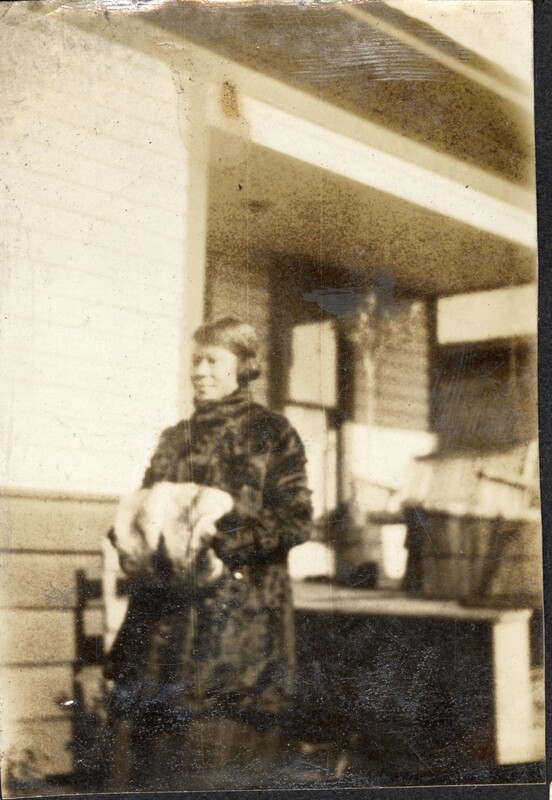
Sepia-toned photograph of an unidentified woman standing outdoors near a wooden structure, likely a porch or small building. She is dressed in a long coat with a fur collar and holds what appears to be a fur muff, accessories commonly associated with winter fashion during the late 1920s and early 1930s. Her clothing and posture suggest a posed snapshot taken during colder weather.
The photograph reflects everyday life and personal style during the early twentieth century. Images such as this often appeared in family albums or scrapbooks, preserving informal moments and individual portraits outside the studio setting.
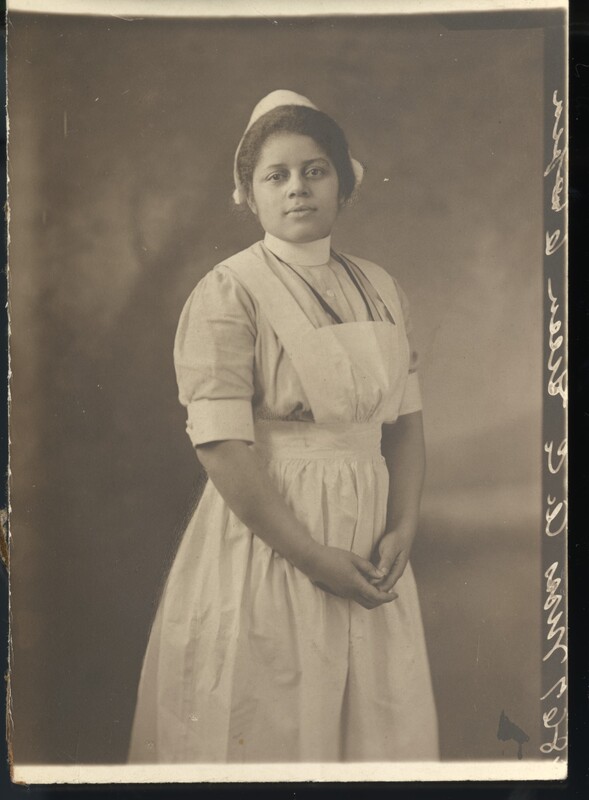
Sepia-toned studio portrait of a young woman identified as Alice, dating to approximately 1927–1930. She stands facing the camera against a plain studio backdrop, wearing a light-colored dress with a white apron and cap. Her clothing suggests either domestic service attire or a work uniform commonly worn by women employed in household or hospitality roles during the early twentieth century.
The portrait reflects the conventions of studio photography of the period, in which individuals posed formally to create keepsake images for family members and personal collections. Images such as this document the lives and labor of African American women during the early twentieth century, preserving individual identity and presence within family and community histories. The photograph is part of the William and Mary Jackson Collection.
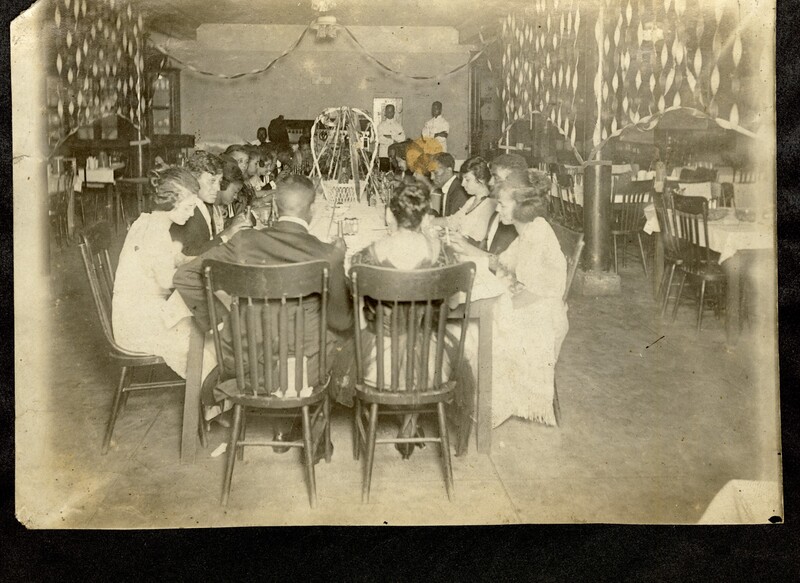
Black-and-white photograph showing a group of men and women seated together at a long dining table during a social gathering, dating to approximately 1919–1922. The individuals are dressed in formal attire typical of the early twentieth century, suggesting a special occasion such as a banquet, club meeting, or celebratory event. The table is decorated with a tall centerpiece, and the room is adorned with streamers and other festive decorations.
The image captures a moment of community life and social fellowship, reflecting the importance of gatherings, clubs, and communal meals within African American communities during the early twentieth century. The photograph is part of the Mabel Vernon Alford Collection and is preserved at the Auburn Avenue Research Library on African American Culture and History, part of the Fulton County Library System.
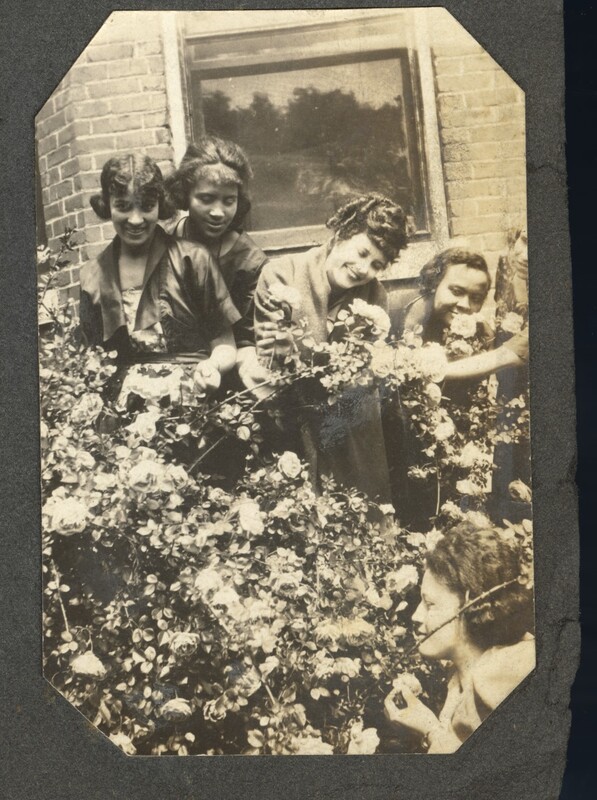
Sepia-toned photograph of a group of young women gathered around a flowering bush, smiling and smelling the blossoms. The women lean over the flowers and appear relaxed and playful, suggesting a candid moment captured outdoors beside a brick building. Their hairstyles and clothing—loose dresses, jackets, and waved or bobbed hair—reflect early twentieth-century fashion.
The image offers a glimpse of leisure and friendship among young African American women during the late 1910s or early 1920s. Informal photographs like this often documented everyday moments shared among friends and family, preserving scenes of social life, beauty, and joy within community settings. The photograph is part of the Mabel Vernon Alford Collection.
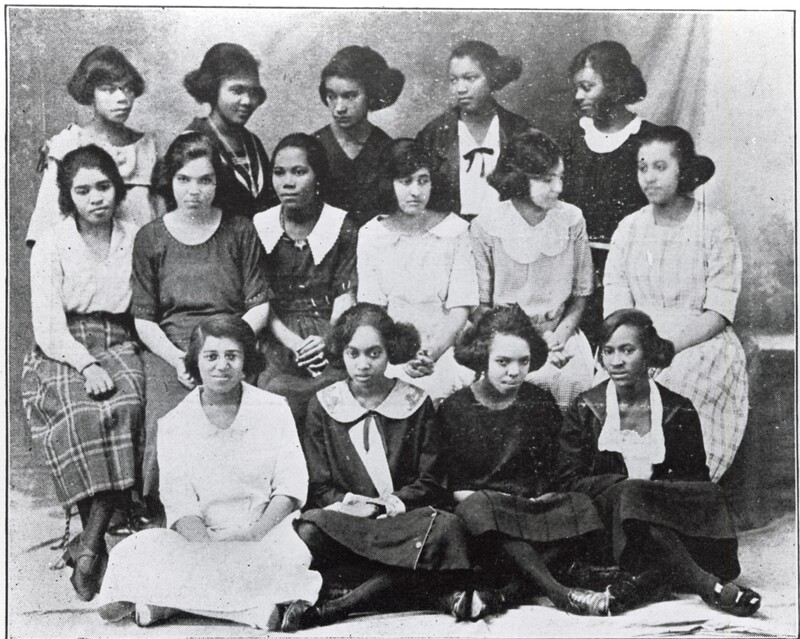
Group portrait of African American schoolgirls photographed in the 1920s. The students are arranged in three rows against a studio backdrop, wearing dresses typical of the period, including garments with sailor collars, pleated skirts, and patterned fabrics. Their hairstyles and clothing reflect the fashion of young women and girls during the early twentieth century.
Photographs such as this often documented school classes, clubs, or student groups and were commonly preserved in family albums and community collections. The image reflects the importance of education within African American communities during the early twentieth century and provides a glimpse into the lives of young students during the 1920s.
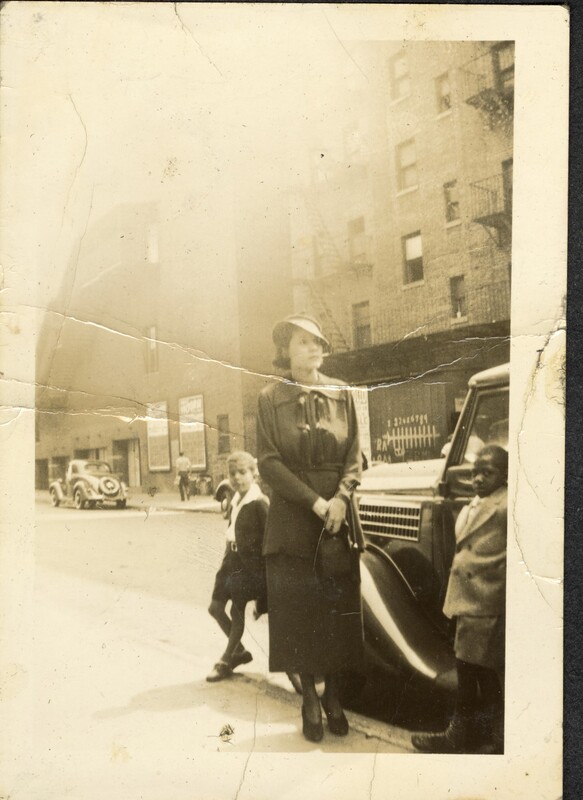
Photograph of an unidentified woman standing beside an automobile on a city street, dating to approximately 1928–1932. The woman wears a cloche-style hat and a tailored coat typical of late 1920s and early 1930s fashion. Two children stand nearby, one leaning against the automobile while another stands slightly behind her. In the background, multi-story buildings, fire escapes, and other automobiles line the street, situating the scene within an urban neighborhood.
Images such as this offer glimpses of everyday life during the early twentieth century, documenting fashion, family relationships, and the growing presence of automobiles in city environments. The photograph comes from the Williams family scrapbook and reflects the kinds of informal snapshots families preserved to record daily experiences and community life.
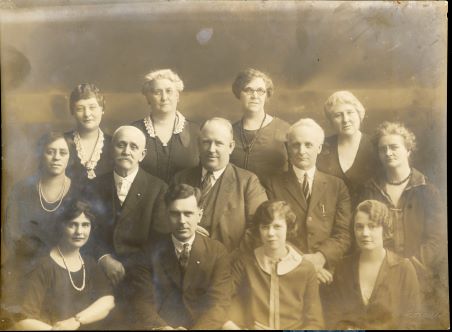
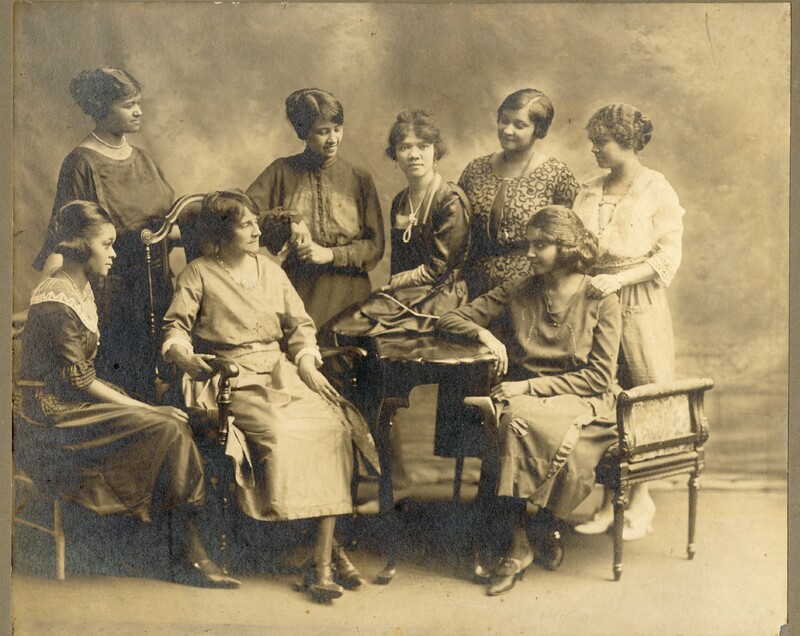
Group portrait of African American women affiliated with the Alpha Kappa Alpha Sorority, Inc. at the University of Cincinnati in 1922. The photograph includes Margaret Bowen (front row, left) seated among fellow members of the Omicron Chapter. The women are arranged in a studio setting, seated and standing around a small table, dressed in fashionable early-1920s attire including tailored dresses, necklaces, and carefully styled hair.
The portrait reflects the importance of Black sororities as spaces of sisterhood, scholarship, and leadership for African American women in higher education during the early twentieth century. Through organizations like Alpha Kappa Alpha, college-educated Black women built networks of mutual support while advancing academic achievement, civic engagement, and community uplift.
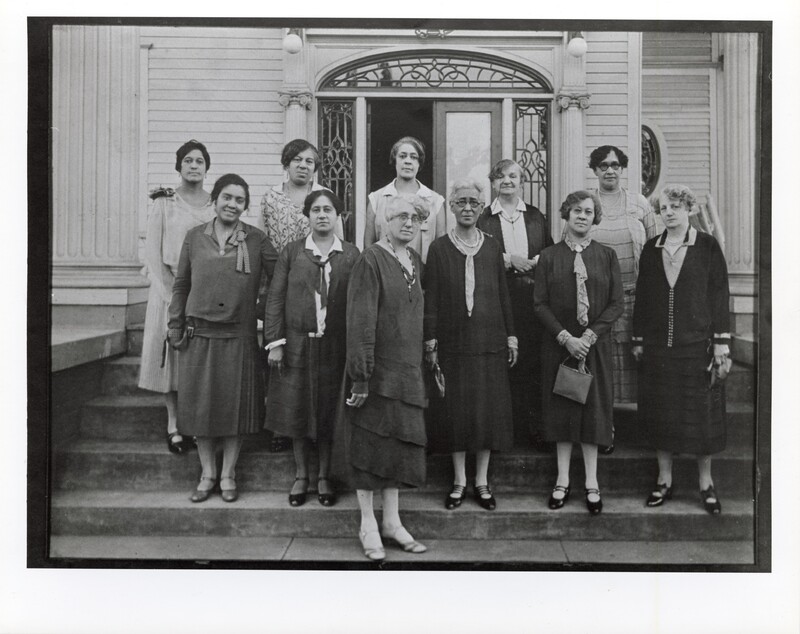
Group portrait of African American clubwomen gathered outside a building in the 1920s. The photograph includes prominent civic leaders Lugenia Burns Hope, seated in the front row center, and Selena Sloan Butler standing to her right. The women are dressed in tailored dresses, coats, and hats typical of the period, reflecting the dignity and professionalism of Black women engaged in community leadership.
Images like this document the powerful networks of African American clubwomen who organized for education, social reform, and community uplift during the early twentieth century. Their collective efforts shaped civic institutions, expanded opportunities for Black families, and strengthened movements for racial advancement across the United States.
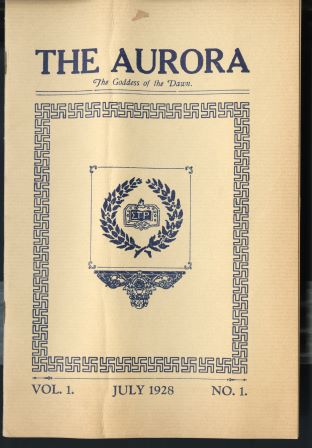
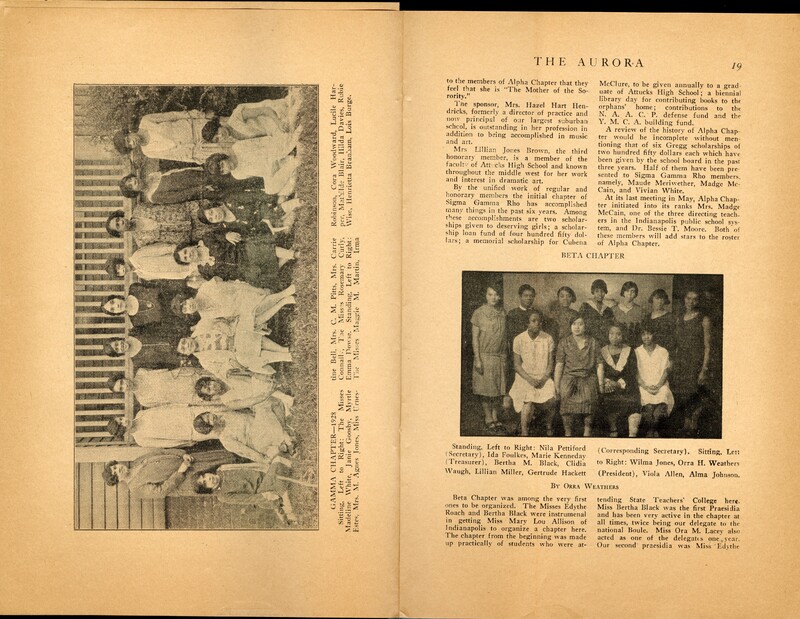
Pages from the 1928 issue of The Aurora, the official magazine of Sigma Gamma Rho Sorority, Inc., featuring photographs and reports from several collegiate chapters. The pages highlight members of the Beta, Gamma, and Delta chapters, including group portraits of sorors posed together and accompanied by captions identifying individual members and officers. The articles describe chapter activities, leadership roles, scholarship initiatives, and social events organized by members.
These images and texts document the early growth of the sorority and the important role African American women played in higher education, professional development, and community leadership during the 1920s. The photographs capture the pride, camaraderie, and intellectual engagement of young Black women building networks of sisterhood and service in the early twentieth century.
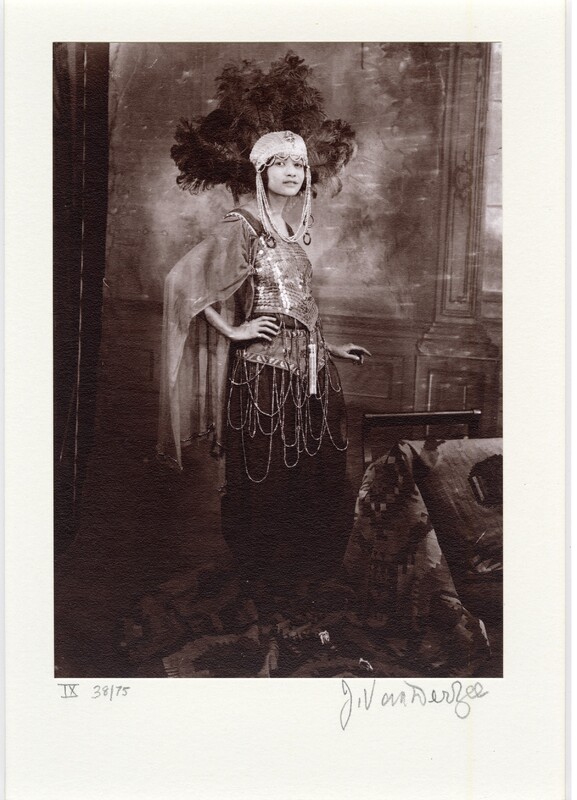
Studio portrait of an African American woman standing in an elaborately styled outfit, photographed in the mid-1920s by James Van Der Zee. The woman wears a dramatic feathered headdress and a jeweled headpiece, paired with a richly decorated dress adorned with beads, chains, and metallic embellishments. She poses confidently with one hand on her hip against a painted studio backdrop. The striking costume and theatrical styling reflect the glamour, creativity, and expressive fashion associated with the Harlem Renaissance era, a period when portrait photography celebrated individuality, elegance, and cultural pride.
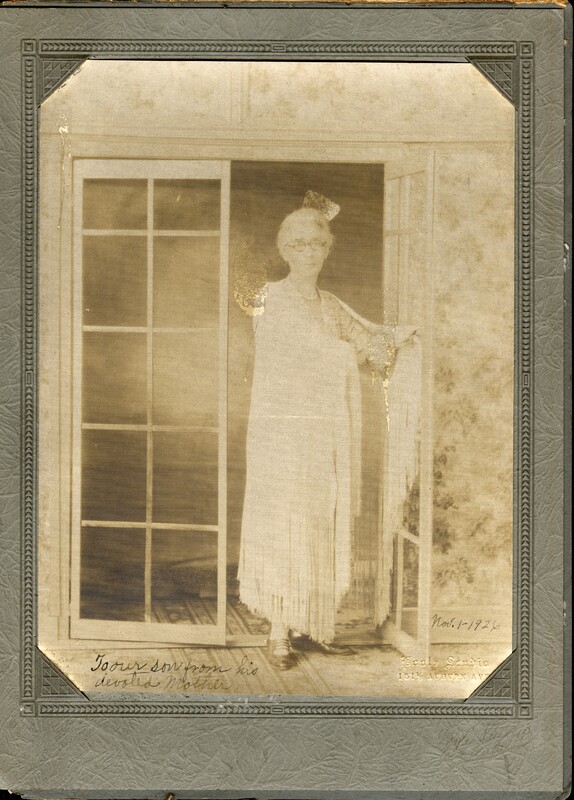
Sepia studio portrait of an African American woman standing in a doorway wearing a shawl and a fringed dress, photographed in Atlanta in 1926. The inscription on the photograph reads, “To our son from your devoted mother, November 1, 1926.” The woman may be Selena Sloan Butler, though this identification is not confirmed. The portrait reflects the dignity, style, and familial devotion expressed through formal portrait photography in early twentieth-century African American communities.