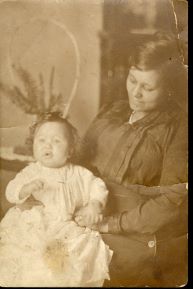
A young mother sits holding her infant child in a softly lit studio portrait, likely dating to the 1920s. The mother gazes downward with a calm, attentive expression while the baby looks outward toward the camera. The intimate composition highlights the tenderness of motherhood while also reflecting the quiet endurance, care, and emotional strength required to nurture and protect family during the early twentieth century.
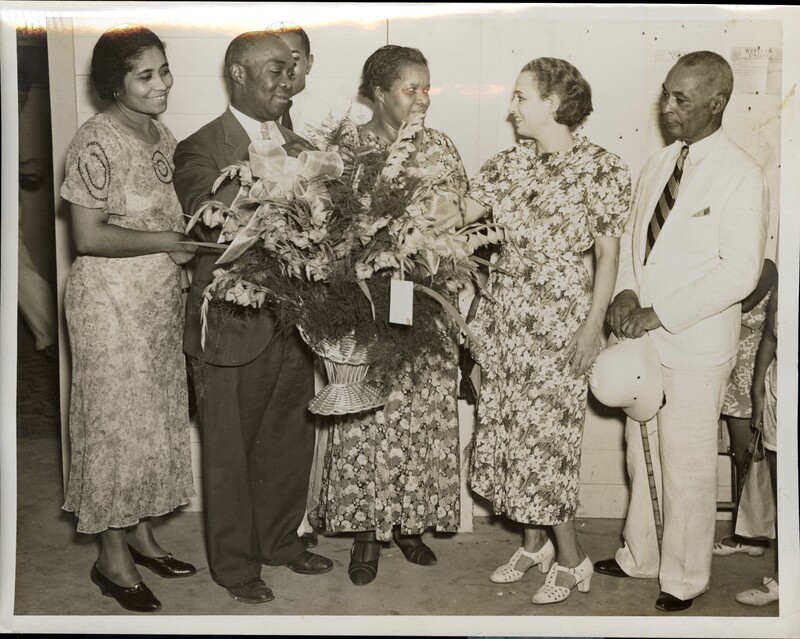
Photograph showing educator and activist Nannie Helen Burroughs presenting a large floral arrangement to stage and film actress Edna Thomas following a performance of MacBeth, circa 1936. Thomas, an Atlanta-born performer known for her work in theater and early American film, stands near the center of the image receiving the bouquet.
Other individuals identified in the photograph (from left to right) include Mrs. U. R. McDodana, Jesse O. Thomas, Samuel Houston, and John Silvera, who appears in the background. The group is gathered indoors, dressed in formal attire typical of the mid-1930s.
The image documents a moment of recognition celebrating the achievements of an African American performer during a period when Black artists and intellectuals were expanding their presence in American theater, film, and cultural life despite the limitations imposed by segregation. The photograph forms part of the Jesse O. Thomas papers.
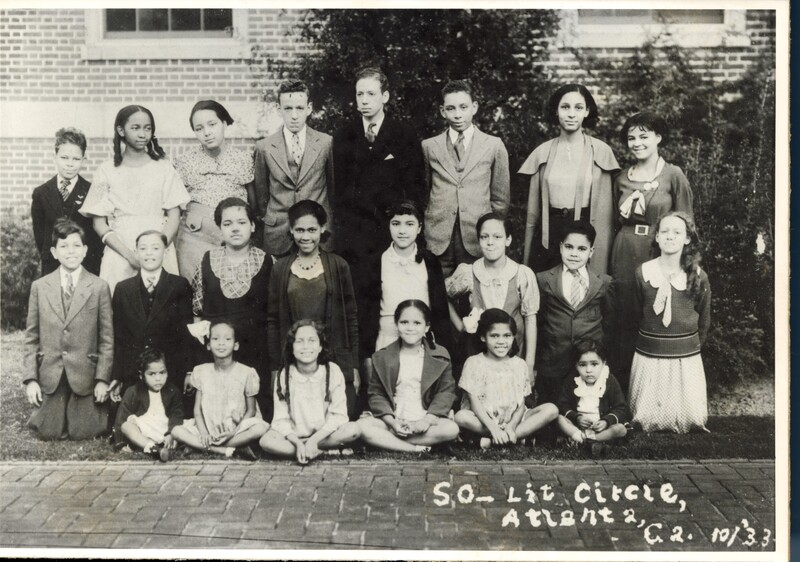
Group photograph of members of the Soc-Lit (Social–Literary) Circle in Atlanta, Georgia, dated October 1933. The image shows a large group of children and adolescents arranged in three rows outdoors in front of a brick building. The group includes boys and girls dressed in formal or semi-formal clothing typical of the early 1930s, including suits, dresses, and hair bows.
Anne Thomas, identified in the caption data as having long curls, appears in the back row, second from the left. Social and literary circles such as this were common community and youth organizations in African American communities during the early twentieth century. These groups often fostered reading, public speaking, social development, and intellectual engagement among young people. The photograph documents youth participation in organized educational and cultural activities in Atlanta during the Great Depression era.
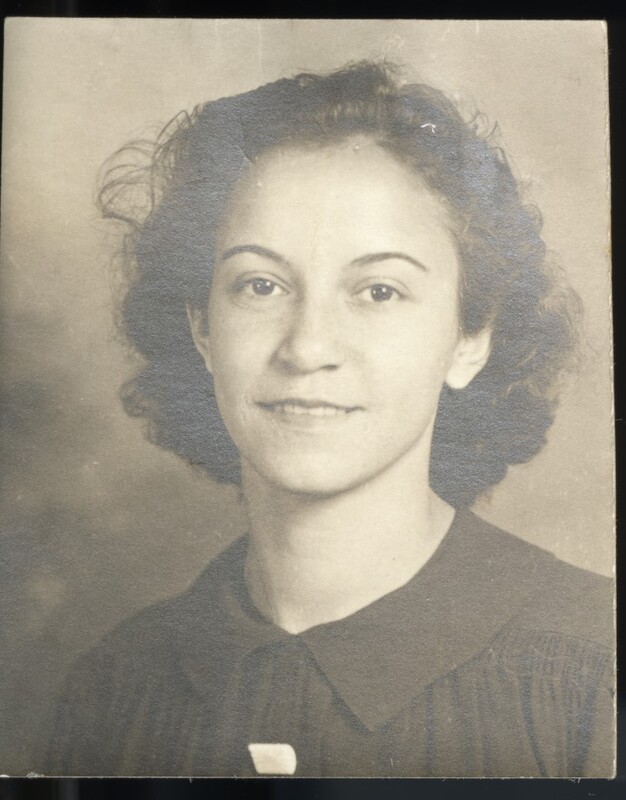
Portrait photograph of Elsie A. Cuff taken in 1936 while she was a student at Virginia State College (now Virginia State University). The image shows Cuff posed against a studio backdrop, wearing a dark blouse with a rounded collar. Her hairstyle and clothing reflect the fashion of the mid-1930s.
Studio portraits such as this were commonly produced for school records, yearbooks, or personal keepsakes during the early twentieth century. The photograph preserves the likeness of a young African American college student during a period when historically Black colleges and universities played a vital role in expanding educational opportunities and professional pathways for Black Americans. The photograph is part of the Jesse O. Thomas papers.
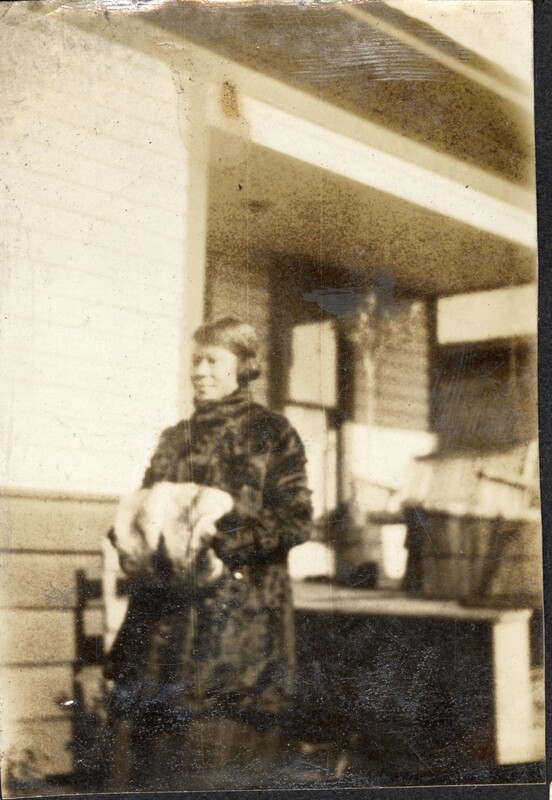
Sepia-toned photograph of an unidentified woman standing outdoors near a wooden structure, likely a porch or small building. She is dressed in a long coat with a fur collar and holds what appears to be a fur muff, accessories commonly associated with winter fashion during the late 1920s and early 1930s. Her clothing and posture suggest a posed snapshot taken during colder weather.
The photograph reflects everyday life and personal style during the early twentieth century. Images such as this often appeared in family albums or scrapbooks, preserving informal moments and individual portraits outside the studio setting.
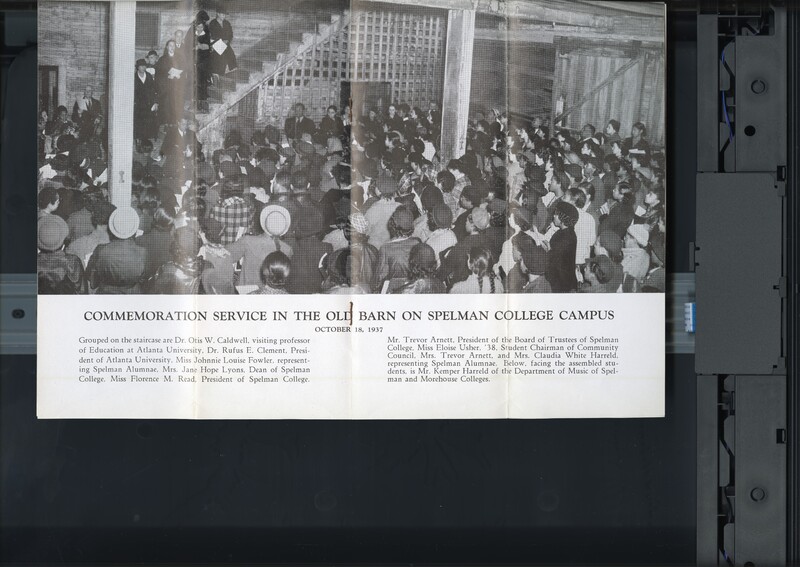
Magazine spread featuring a photograph of students gathered in the Old Barn on the campus of Spelman College during a commemorative service held on October 18, 1937. The image shows a large assembly of students seated closely together while speakers stand on a staircase addressing the crowd. The event reflects the traditions of campus gatherings and commemorations that brought together students, faculty, and visiting leaders.
Individuals identified in the caption include Dr. Otis W. Caldwell of Atlanta University, Dr. Rufus E. Clement, President of Atlanta University, Mrs. Johnnie Louise Fowler representing Spelman alumnae, Dean Jane Hope Lyons, and Spelman College President Florence M. Read. Also noted are Mr. Trevor Arnett, President of the Board of Trustees, and student representatives including Miss Eloise Usher and Mrs. Claudia White Harreld. The photograph was originally taken in 1936 and later reproduced in the November 1937 issue of The Spelman Messenger.
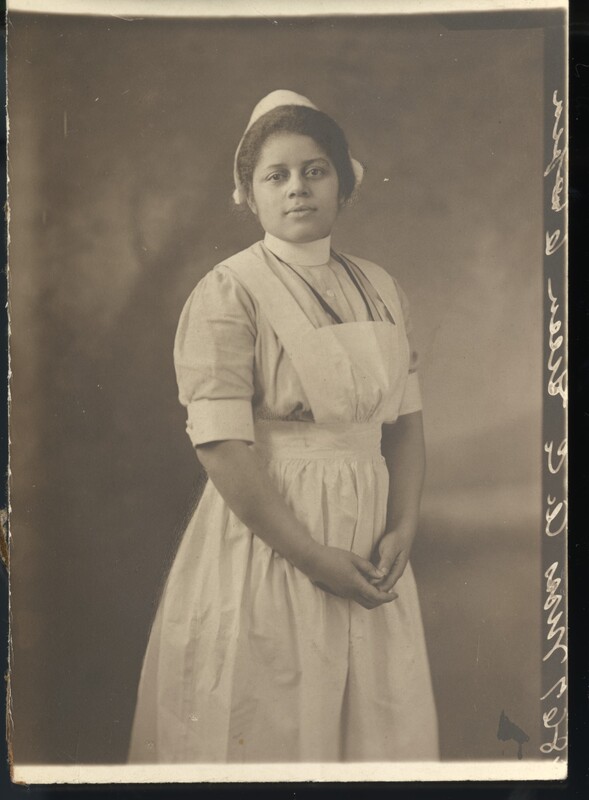
Sepia-toned studio portrait of a young woman identified as Alice, dating to approximately 1927–1930. She stands facing the camera against a plain studio backdrop, wearing a light-colored dress with a white apron and cap. Her clothing suggests either domestic service attire or a work uniform commonly worn by women employed in household or hospitality roles during the early twentieth century.
The portrait reflects the conventions of studio photography of the period, in which individuals posed formally to create keepsake images for family members and personal collections. Images such as this document the lives and labor of African American women during the early twentieth century, preserving individual identity and presence within family and community histories. The photograph is part of the William and Mary Jackson Collection.
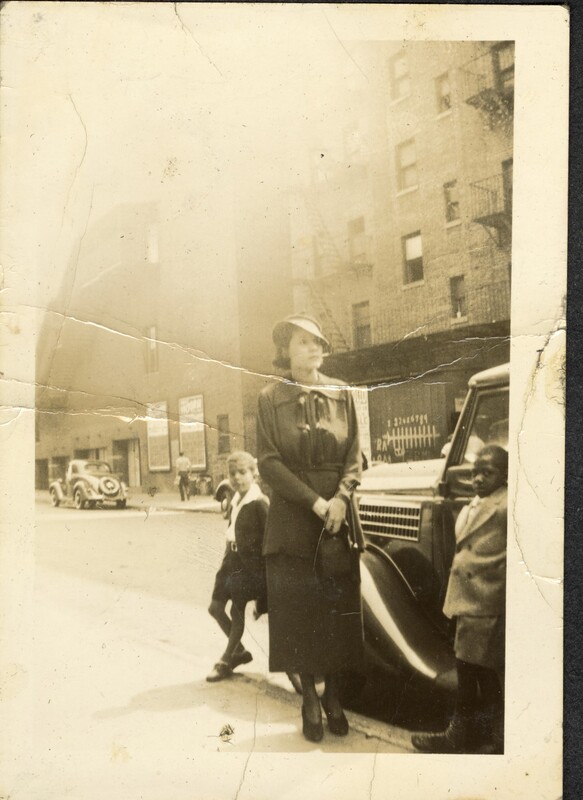
Photograph of an unidentified woman standing beside an automobile on a city street, dating to approximately 1928–1932. The woman wears a cloche-style hat and a tailored coat typical of late 1920s and early 1930s fashion. Two children stand nearby, one leaning against the automobile while another stands slightly behind her. In the background, multi-story buildings, fire escapes, and other automobiles line the street, situating the scene within an urban neighborhood.
Images such as this offer glimpses of everyday life during the early twentieth century, documenting fashion, family relationships, and the growing presence of automobiles in city environments. The photograph comes from the Williams family scrapbook and reflects the kinds of informal snapshots families preserved to record daily experiences and community life.
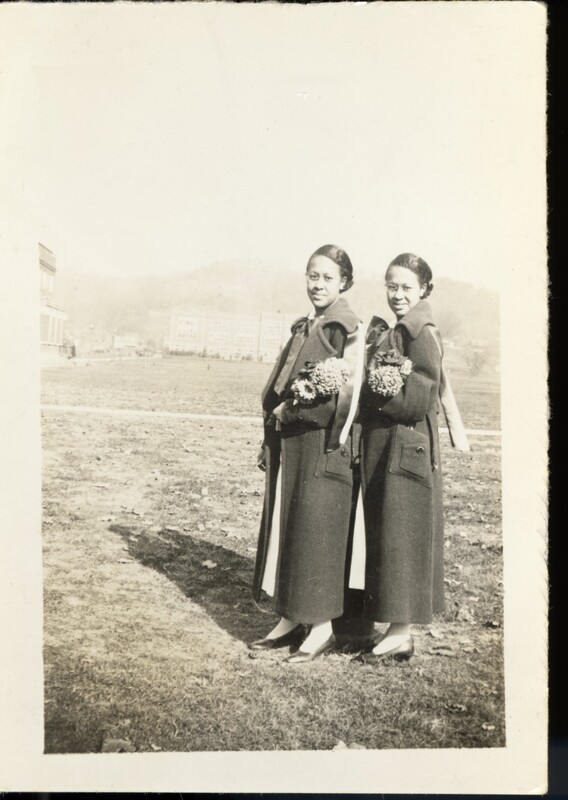
Outdoor photograph of twins Laura and Louise Travis, students at West Virginia State College, standing side by side during Delta Pro activities in 1936. The young women are dressed in long coats over light-colored dresses and each holds a small bouquet of flowers, indicating their participation as new probationary members (“Delta Pro”) of Delta Sigma Theta Sorority.
The sisters pose together on the campus lawn with college buildings and hills visible in the distance. Their matching posture and similar attire highlight both their twin relationship and the sense of unity associated with sorority initiation traditions. The photograph reflects moments of friendship, sisterhood, and collegiate life among African American women during the 1930s.
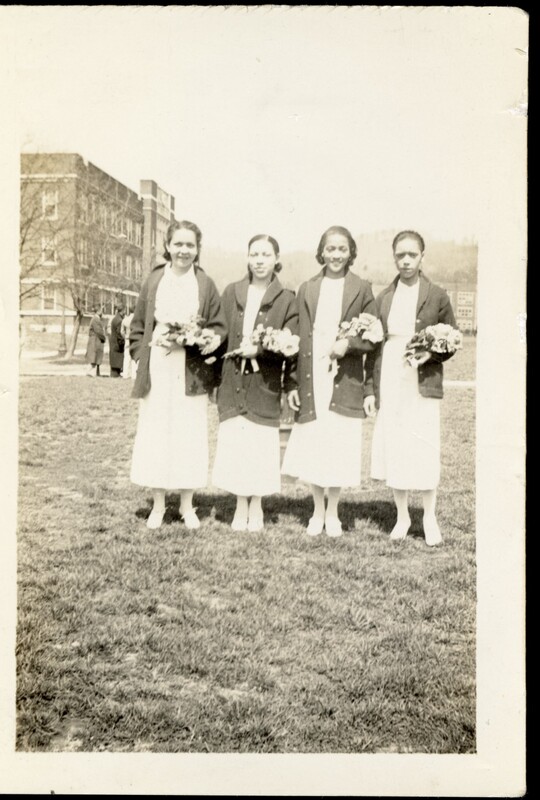
Outdoor photograph of four young African American women standing on the campus of West Virginia State College in 1936. The women are newly initiated members on probation (“Pro”) in the Delta Sigma Theta Sorority, including Louise Maxwell and three fellow sorority sisters. Each woman holds a bouquet of flowers and wears a light-colored dress with a dark jacket, standing side-by-side on the lawn with campus buildings visible in the background.
The image documents an early stage of sorority membership, when new initiates participated in ceremonies and campus traditions marking their entry into the sisterhood. Their coordinated attire, flowers, and formal posture suggest a celebratory moment tied to initiation activities and the welcoming of new members into the organization’s collegiate community.
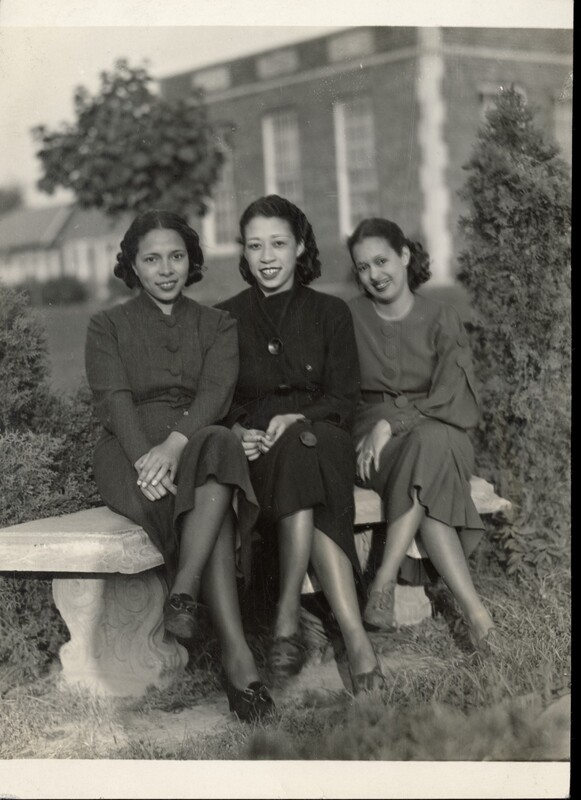
Outdoor portrait of three young African American women seated together on a stone bench in front of a brick school building in 1936. The women are identified as members of the Miss West Virginia court: Eddie Mae Stubbs (left), Dot Bradshaw (center, Miss West Virginia), and Violet Burks (right). They sit close together, smiling toward the camera, dressed in fashionable mid-1930s dresses with softly waved hairstyles typical of the period.
The photograph captures a moment of camaraderie and pride among the young women during a community pageant event. Informal yet composed, the image reflects the social networks and celebratory traditions that brought young Black women together through school, community events, and local recognition.
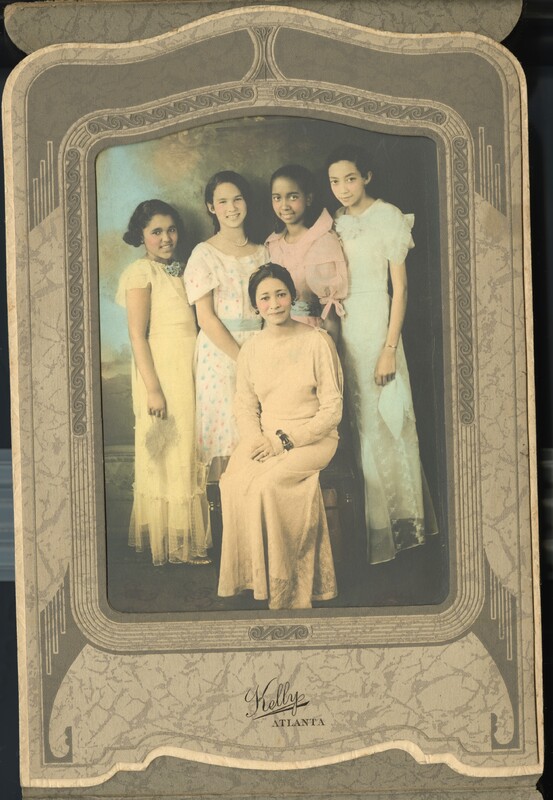
Hand-tinted studio portrait of an African American family group taken around 1930. Nell Thomas sits in the center, surrounded by four young women, including her daughter Anne Braxton, who stands third from the left. The women wear light-colored dresses typical of the late 1920s and early 1930s, and the photograph has been delicately hand-colored to highlight their clothing and skin tones.
The carefully posed composition and decorative studio mount reflect the importance of family portraiture within African American communities. Images like this celebrated kinship, pride, and generational connection, preserving moments of unity and affection across mothers and daughters.
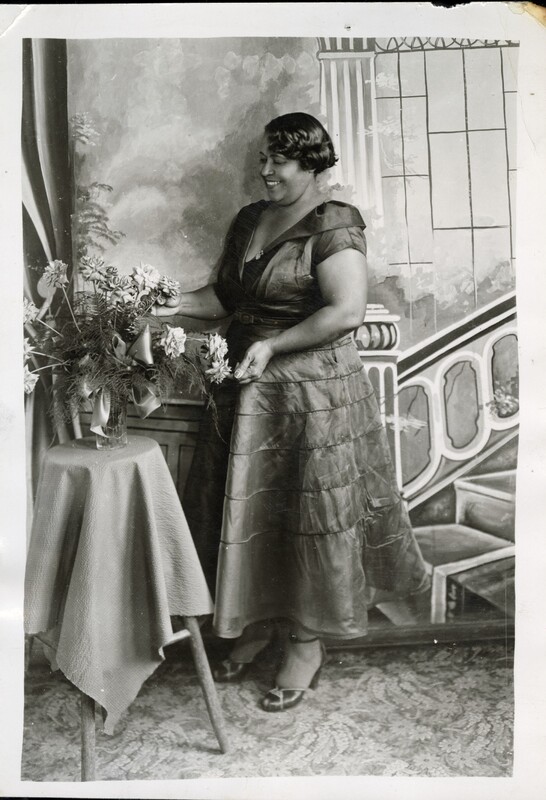
Studio portrait of Ruby Blackburn taken in the early 1930s. Blackburn stands beside a small table arranging flowers in a vase, wearing a fashionable dress with layered fabric and styled hair typical of the era. The staged studio backdrop and elegant pose highlight the grace, style, and self-presentation of African American women during the early twentieth century.
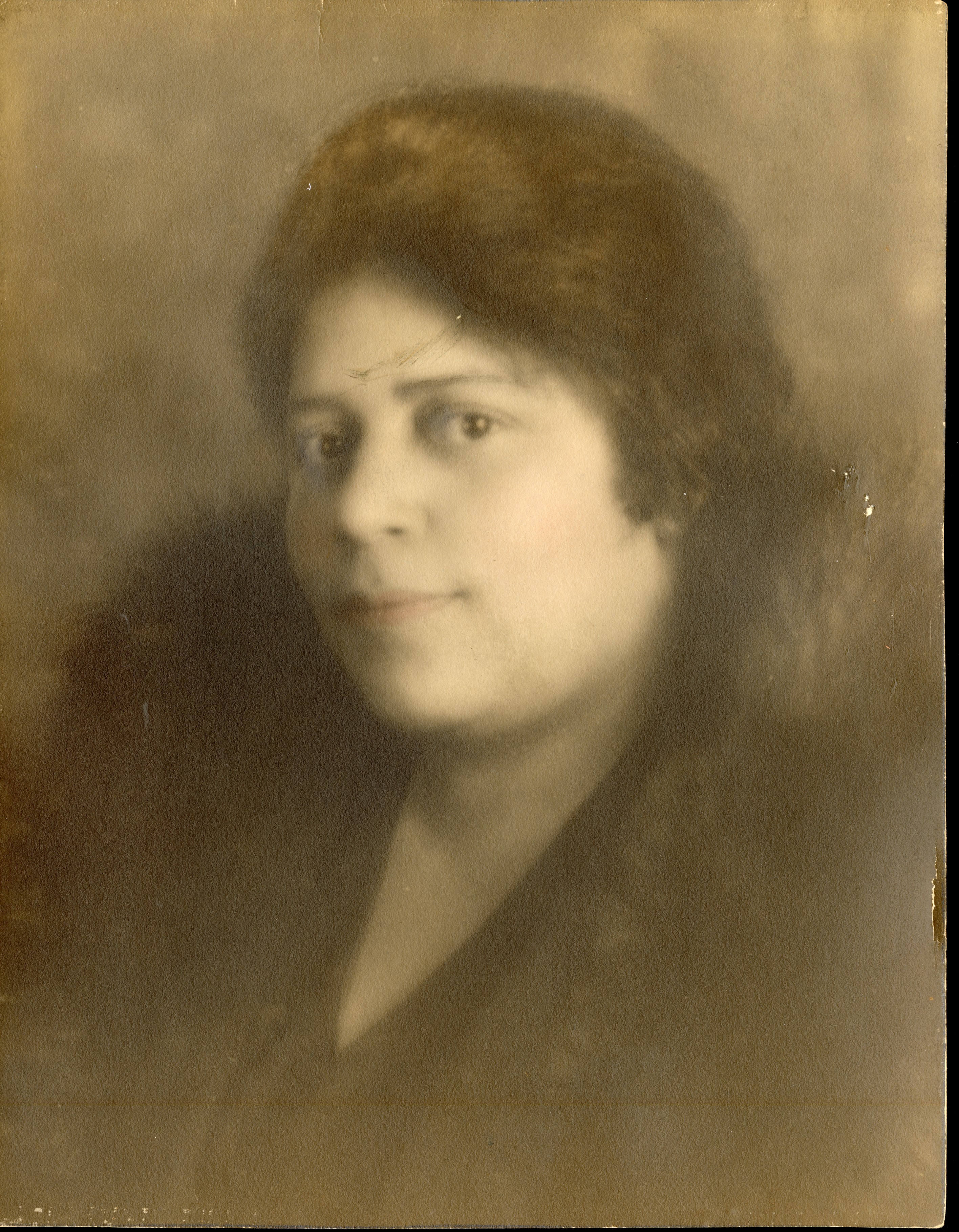
Sepia-toned studio portrait of a woman identified as Alice, taken in 1931. She has dark hair styled in soft waves and wears a dark blouse or dress. She is posed in a three-quarter profile, looking slightly to the side with a calm expression against a plain studio backdrop. (Wm. & Mary Jackson Collection).