A woman identified as Dean Jean Fairfax sits confidently at her desk in an office setting, likely photographed in 1945 for the yearbook at The Tuskegee Institute. Dressed in a tailored suit with neatly styled hair, she appears composed and professional while surrounded by papers and office materials. The image captures a balance of elegance and authority, reflecting the intellectual labor, leadership, and determination women carried into professional spaces while still maintaining grace and self-possession.
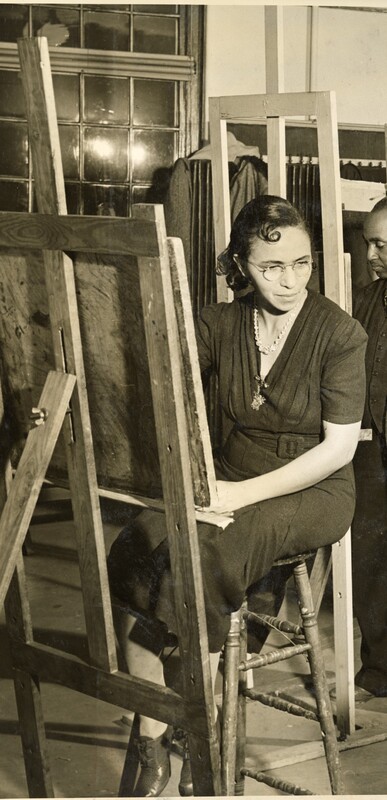
Photographs of two women participating in a painting class, circa 1940s. Each woman works at an easel in a classroom studio, surrounded by art supplies and instructional materials. The scene highlights artistic training, concentration, and creative expression in an educational setting.
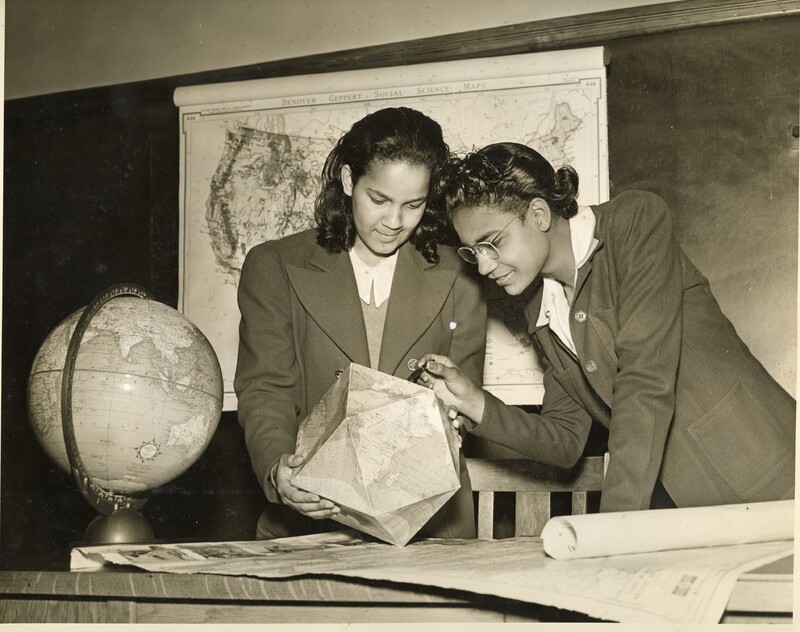
Two students examine a folded map alongside a globe and wall map, reflecting an academic focus on geography and global affairs. The image highlights intellectual engagement and awareness of international issues during the World War II era.
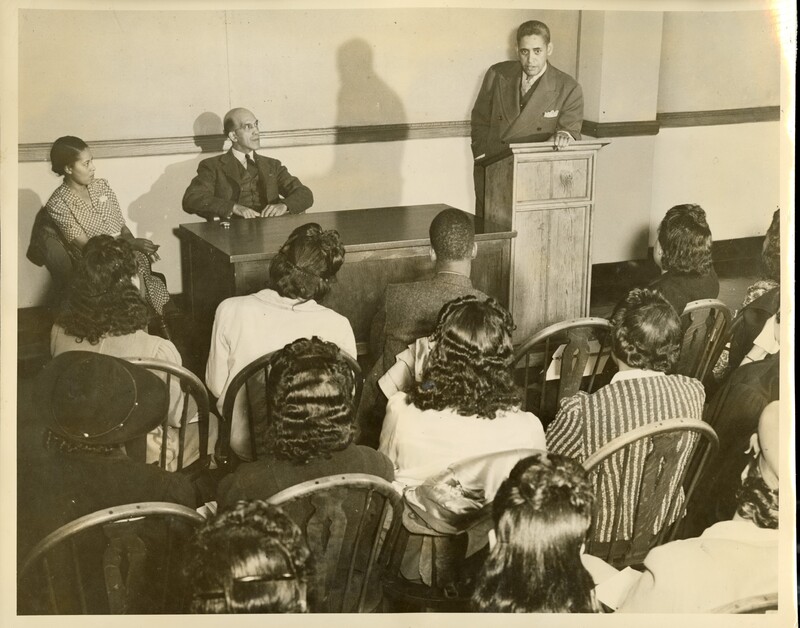
Photograph of young women attending a lecture, circa 1940s. A speaker stands at a podium addressing an audience seated in rows, while two individuals sit at a table beside him. The image highlights the educational environment and intellectual engagement of African American students during the mid-twentieth century.
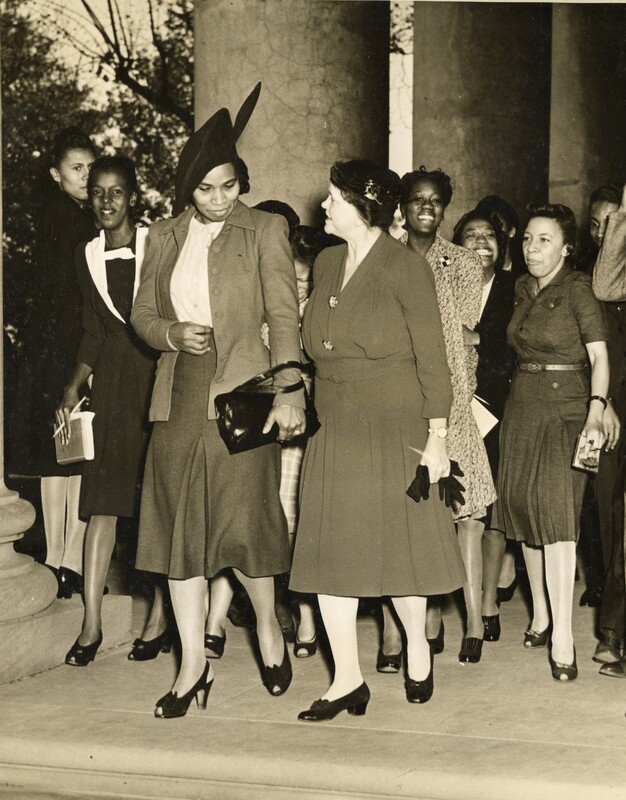
Photograph of Marian Anderson visiting Spelman College, circa 1940s. Anderson is shown walking with a group of women, dressed in formal attire, as they descend the steps of a campus building. The image captures a moment of community gathering and highlights Anderson’s presence at a historically Black women’s college during the height of her celebrated career.
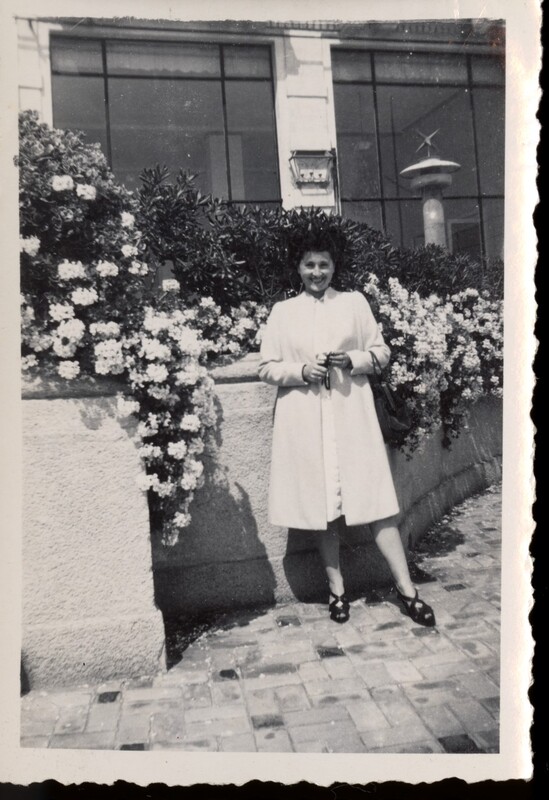
Series of photographs of Madeleine Berthelot taken during a visit to the French Riviera in May 1946. The images show Berthelot posing in front of prominent locations including the Hotel Ruhl in Nice, the Promenade des Anglais, and the Hotel Martinez in Cannes. Her tailored coat, handbag, and composed stance reflect postwar fashion and the culture of travel along the Mediterranean coast in the immediate aftermath of World War II.
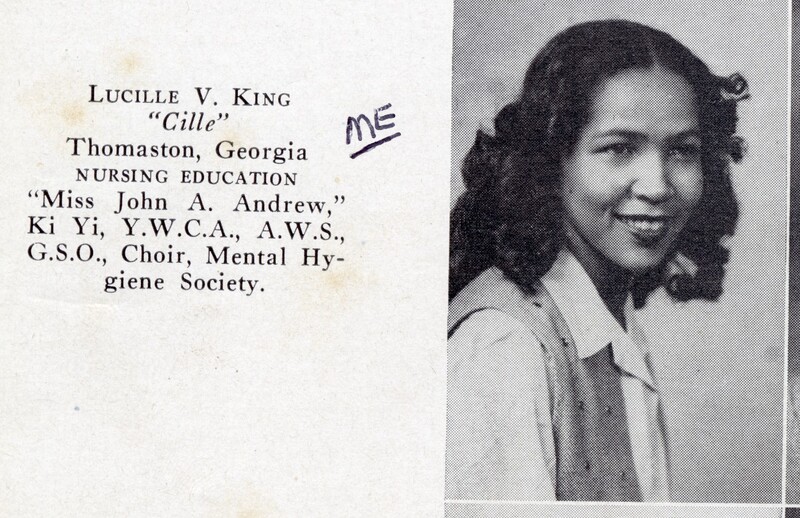
Yearbook portrait of Lucille V. Hill (née King), identified as “Cille,” a nursing education student at Tuskegee Institute, 1945. The accompanying yearbook text notes her hometown of Thomaston, Georgia, and lists several campus activities and organizations, reflecting the active student life and professional training available to Black women at Tuskegee during the 1940s.
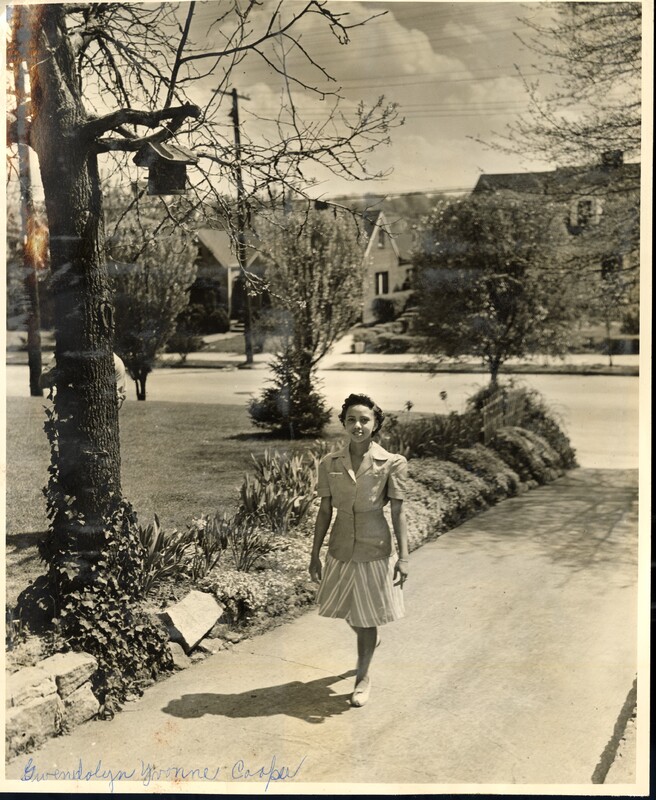
Photograph of Gwendolyn Yvonne Cooper walking along a residential path, 1943. Cooper wears a tailored jacket and pleated skirt typical of early-1940s fashion. The neatly maintained garden, tree with birdhouse, and quiet neighborhood homes evoke a sense of everyday life and domestic calm during the wartime era. The image captures a moment of youthful confidence and ordinary beauty within a mid-20th-century Black residential landscape.
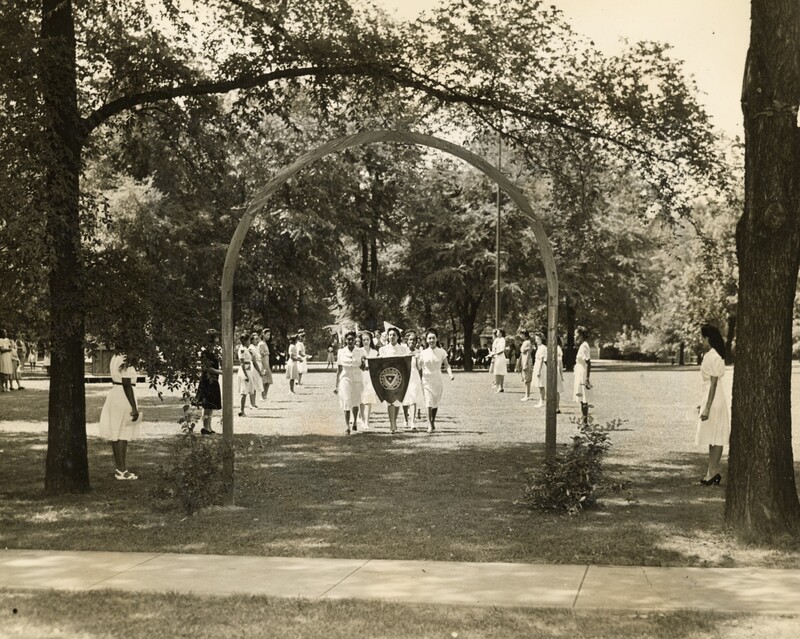
Photograph showing four graduating students from Spelman College leading a commencement procession from Sisters Chapel, circa 1940. The students walk together carrying a banner bearing the college emblem while other participants stand along the pathway observing the ceremony. The procession moves beneath a wooden arch on the college grounds, framed by trees and landscaped lawns.
The students wear light-colored dresses typical of formal collegiate ceremonies of the period. Processions such as this were a traditional part of commencement exercises at Spelman College, marking the formal transition of students from academic study to professional and civic life. Founded in 1881, Spelman College has long been one of the nation’s leading historically Black colleges for women, educating generations of African American leaders in education, public service, and the arts.
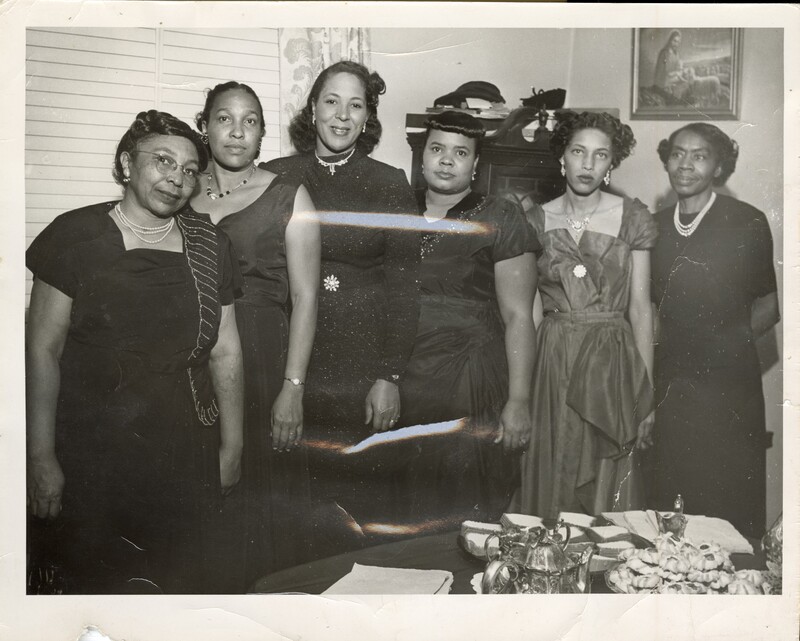
Photograph of Francis Fouch, daughter of Ruby Blackburn, standing with a group of women at a social tea gathering, circa the late 1940s. The women are dressed in formal attire typical of the period, including dark dresses, jewelry, and styled hair, reflecting the elegance and social customs of mid-twentieth-century African American community gatherings.
The group stands indoors behind a table set with a teapot, serving pieces, and pastries, suggesting a formal tea or social reception. Francis Fouch appears among the group alongside Hattie Holmes and other attendees. Such gatherings were important social spaces within African American communities, providing opportunities for fellowship, networking, and civic engagement.
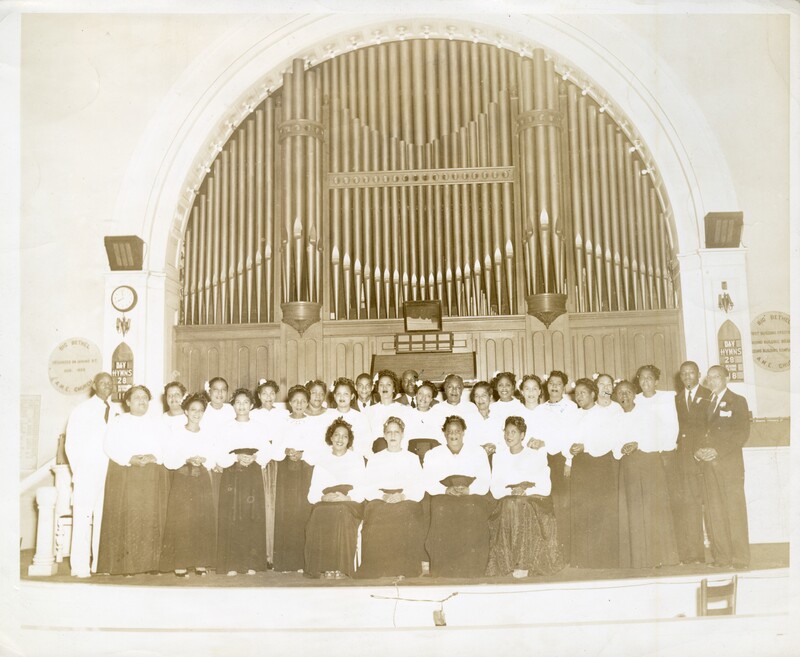
Photograph of the concert choir of Big Bethel A.M.E. Church in Atlanta, Georgia, taken on July 21, 1947. The group is assembled inside the church sanctuary, posed in several rows in front of the large pipe organ. Members of the choir wear coordinated attire—white blouses paired with long dark skirts—reflecting the formal presentation typical of church concert choirs during the mid-twentieth century.
The choir was directed by H. J. Furlow, who served as the ensemble’s musical leader at the time. Big Bethel A.M.E. Church, one of Atlanta’s oldest and most historically significant African American congregations, has long been known for its strong musical tradition and community programming. Concert choirs such as this played a central role in worship services, musical programs, and special events, helping to cultivate sacred music traditions and communal fellowship within the church.
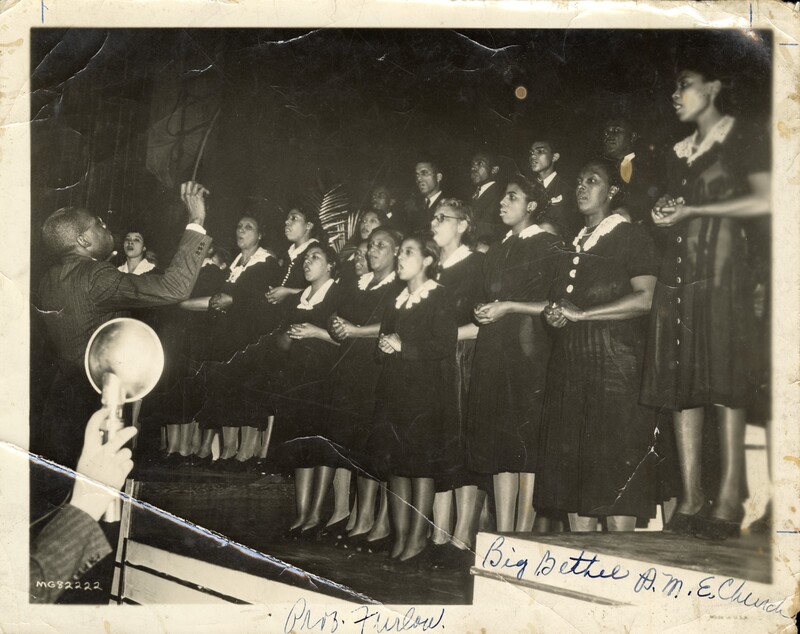
Group photograph of the choir of Big Bethel A.M.E. Church in Atlanta, Georgia, taken between approximately 1946 and 1953. The image shows a choir of men and women standing in several rows on a stage while a conductor leads them in song. The singers wear coordinated dark attire with light collars, typical of mid-twentieth-century church choir uniforms.
The conductor stands at the left foreground with his arm raised, directing the performance. A microphone positioned near the front suggests the performance may have been part of a recorded broadcast, public program, or special church event. Big Bethel A.M.E. Church, founded in 1847, has long served as one of Atlanta’s most prominent African American congregations and a center of religious, cultural, and civic life in the city.
Church choirs such as this played an important role in African American communities during the mid-twentieth century, contributing to worship services while also fostering musical training, fellowship, and community identity.
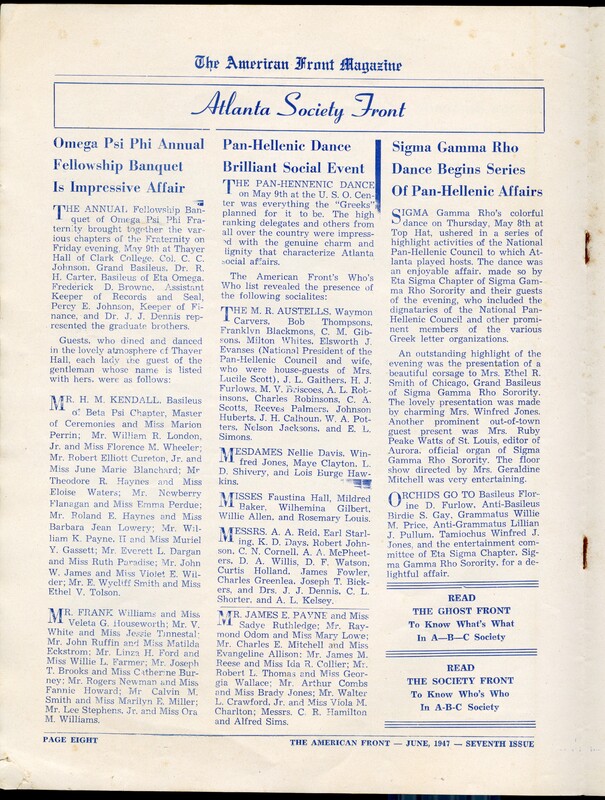
Magazine page from the June 1947 issue of The American Front Magazine, featuring the “Atlanta Society Front” column. The article reports on several social events within Atlanta’s African American community, including a dance hosted by members of Sigma Gamma Rho Sorority, Inc. as part of a series of National Pan-Hellenic Council activities.
The column describes the event held at the Top Hat club and highlights the participation of members of the National Pan-Hellenic Council and other Black Greek letter organizations. It also references prominent sorority leaders and visiting guests, documenting the vibrant social and civic networks cultivated by Black collegiate organizations during the mid-twentieth century.