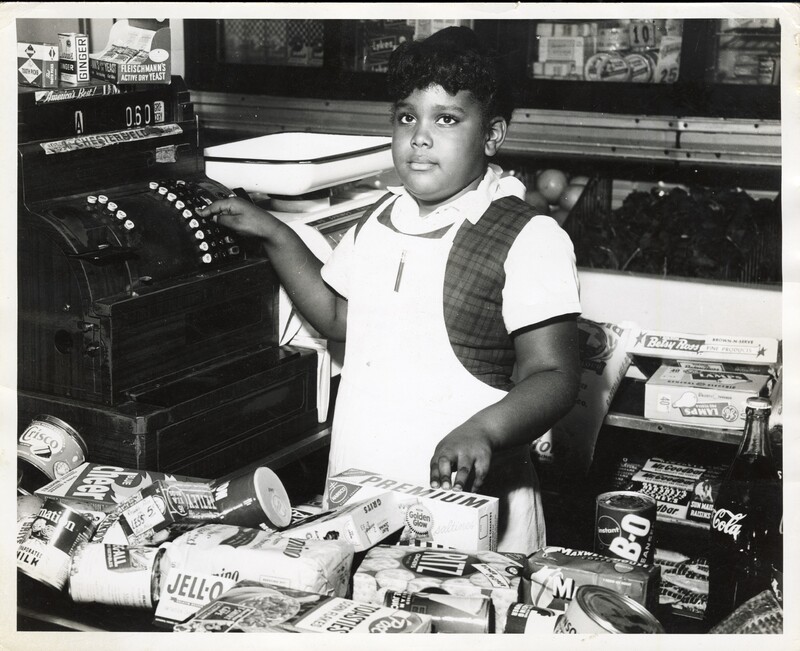
Photograph of an unidentified young girl standing at a cash register in a grocery store, circa 1960s. She wears an apron and appears to be operating the register, surrounded by packaged goods and food items, suggesting participation in work or play within a retail setting.
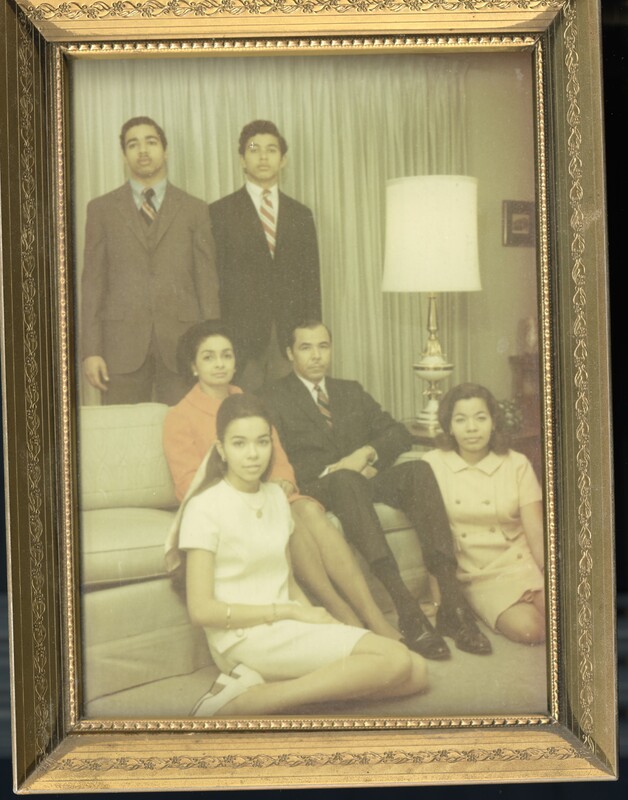
Photograph of Asa G. Yancey (seated on sofa next to wife, Carolyn) and family posed for a formal portrait, undated (circa 1960s). Their daughters Caren and Carolyn are seated on the floor. The family is arranged in a living room setting, with two adults seated and children positioned around them, dressed in coordinated, formal attire. The framed image and domestic interior reflect mid-twentieth-century family portrait traditions and a sense of pride, stability, and togetherness.
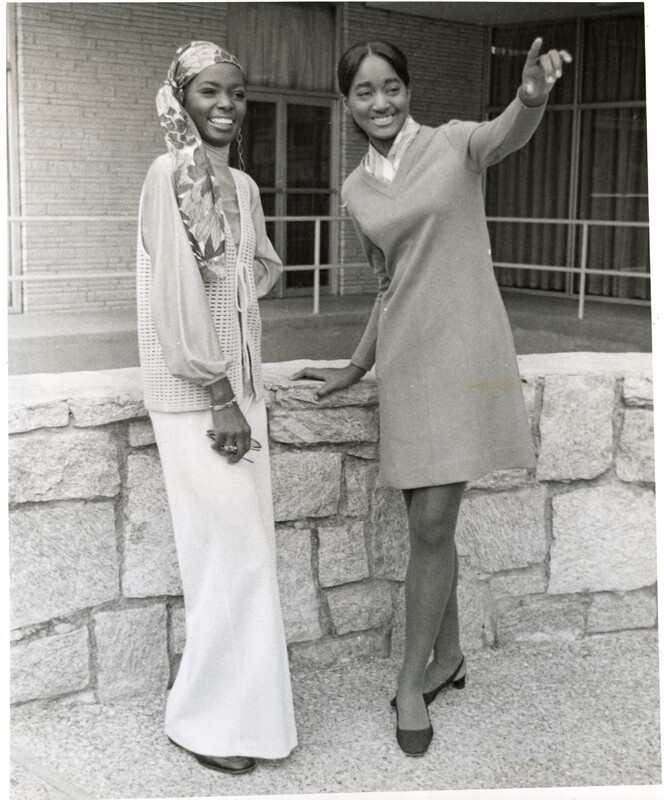
Photograph of Gloria L. Smith (left), Miss Black America, and Reda Wyatt (right), Miss Atlanta NAACP, standing outside the Paschal Brothers Motel in Atlanta, Georgia, October 19, 1969. Both women are dressed in late-1960s fashion, with Wyatt gesturing in the distance. The Paschal Brothers Motel was an important gathering place for African American civic leaders during the Civil Rights era. Photograph by Harmon Perry.
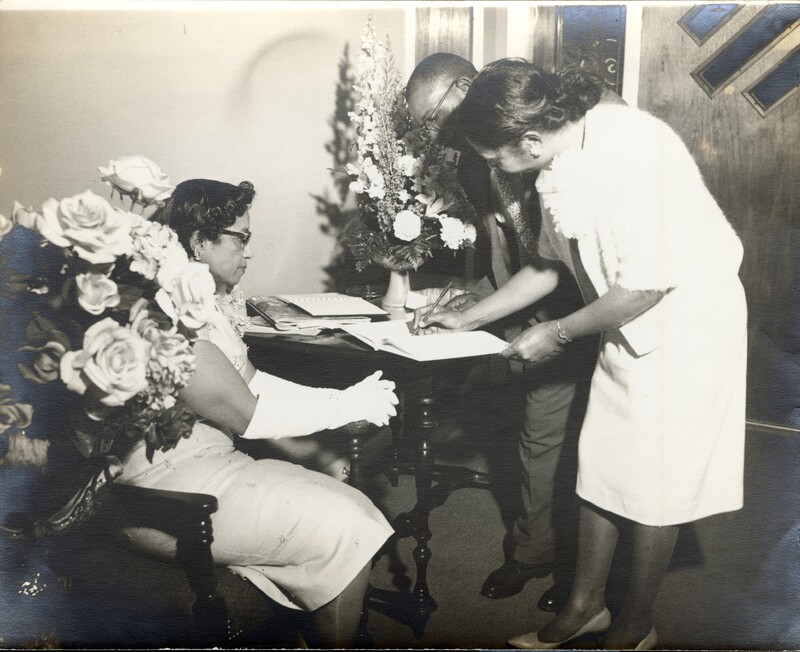
Photograph of Florie Trice and Martha Greer Bentley during an event associated with the National Conclave of Grady Graduate Nurses, taken in 1965. The image shows Martha Greer Bentley standing and signing a document on a table while Florie Trice sits nearby observing the moment. A man stands behind the table, leaning forward to watch the signing. Floral arrangements and formal attire suggest the occasion was part of a ceremonial or organizational gathering.
The photograph documents the professional and social activities of African American nurses connected with the Grady Graduate Nurses organization. Professional nursing associations such as this played an important role in supporting Black medical professionals during the twentieth century, providing networks for professional advancement, leadership development, and community service during a period when opportunities in many medical institutions remained limited by racial discrimination.
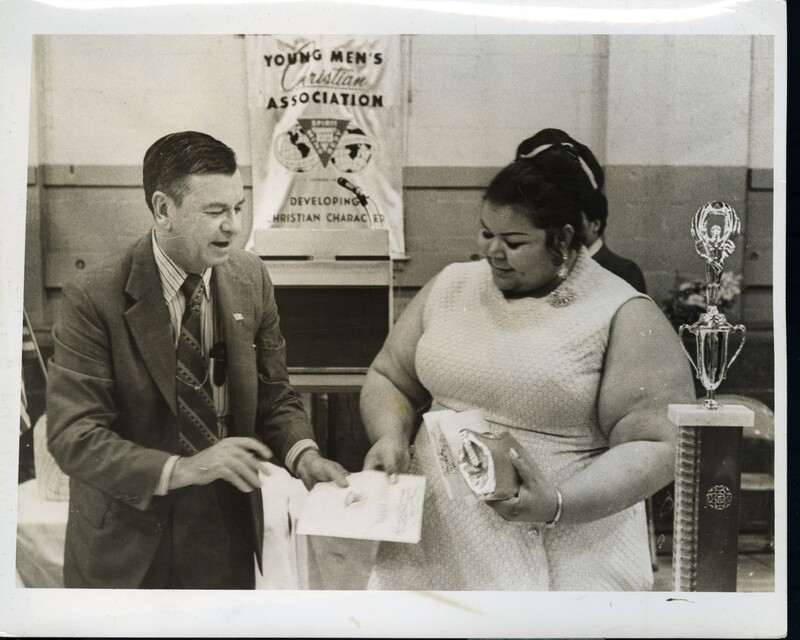
Photograph of Carolyn Fouch Walker, granddaughter of Ruby Blackburn, standing with Herman Talmadge at a YMCA (Young Men's Christian Association) event, circa the early 1960s. Walker holds a document while speaking with Talmadge, who served as governor of Georgia from 1948 to 1955 and later as a United States senator.
The scene appears to take place inside a YMCA facility, indicated by the banner visible in the background reading “Young Men’s Christian Association.” A microphone stand and trophy placed nearby suggest the occasion may have been part of a ceremony, youth program, or recognition event. Walker is dressed in formal attire and appears to be receiving or presenting a document during the event.
The photograph documents a moment of civic engagement and community programming involving local organizations and public officials during the early 1960s.
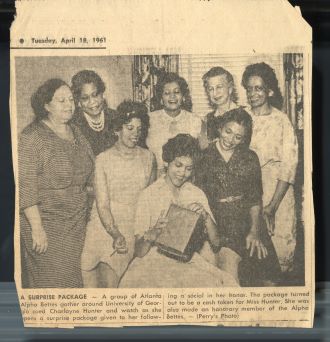
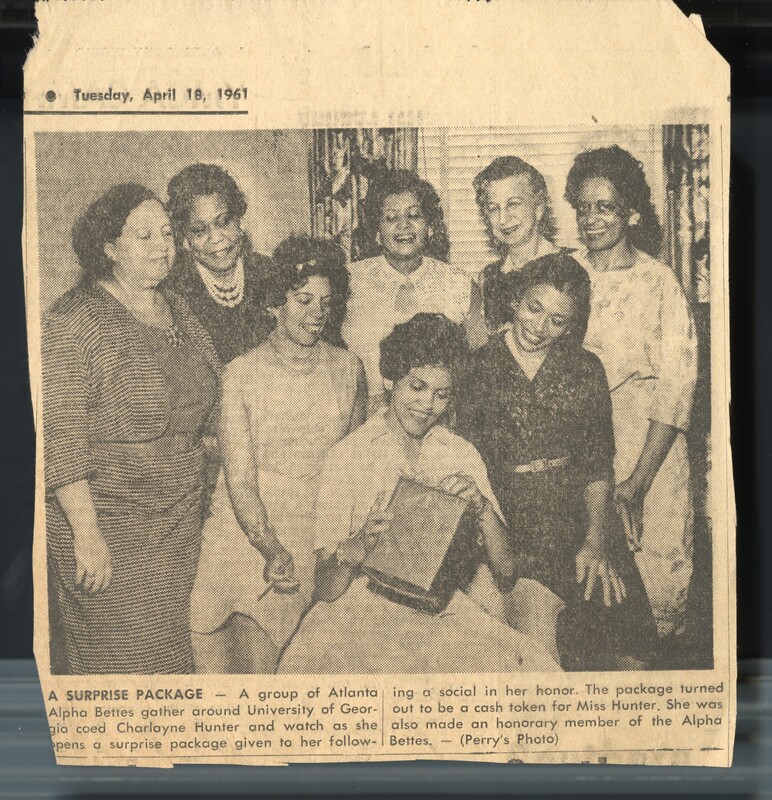
Newspaper clipping published April 18, 1961 in the Atlanta Daily World showing Charlayne A. Hunter surrounded by members of the Alpha-Bettes, a civic and social organization of Atlanta women. The gathering was held in her honor shortly after her historic enrollment at the University of Georgia.
The photograph captures Hunter opening a surprise gift presented during the event while members of the Alpha-Bettes look on. According to the caption, the package contained a cash token and Hunter was also made an honorary member of the group. The moment reflects the strong network of support from Atlanta’s Black women’s organizations for Hunter during the early stages of school integration in the American South.
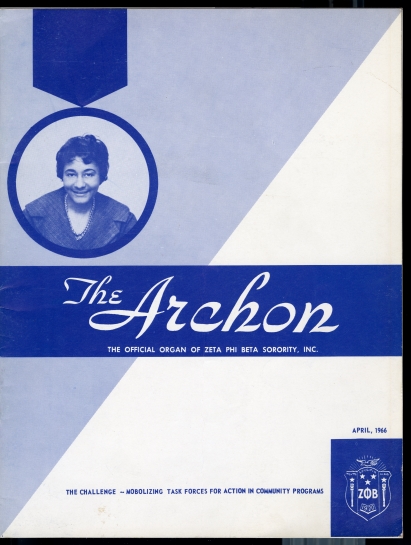
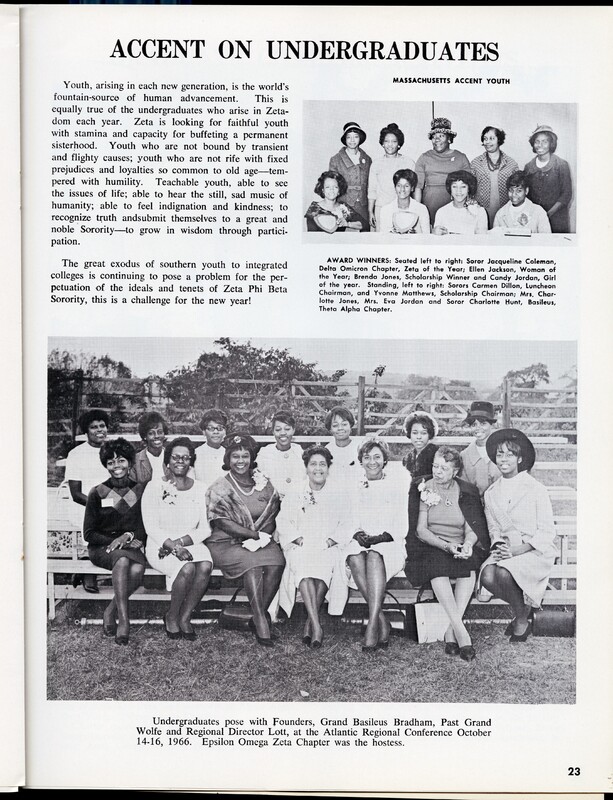
Magazine page from The Archon featuring the article “Accent on Undergraduates,” published in December 1966. The page highlights the participation and achievements of undergraduate members of Zeta Phi Beta Sorority, Inc., emphasizing the organization’s commitment to leadership development, scholarship, and sisterhood among college students.
The lower photograph shows undergraduate members posing with sorority leaders, including founders and national officers, during the Atlantic Regional Conference held October 14–16, 1966. The caption notes the presence of Grand Basileus Bradham and other leaders, with the Epsilon Omega Zeta Chapter serving as host. The page reflects the intergenerational mentorship and leadership structure that connects undergraduate members with the sorority’s national leadership.
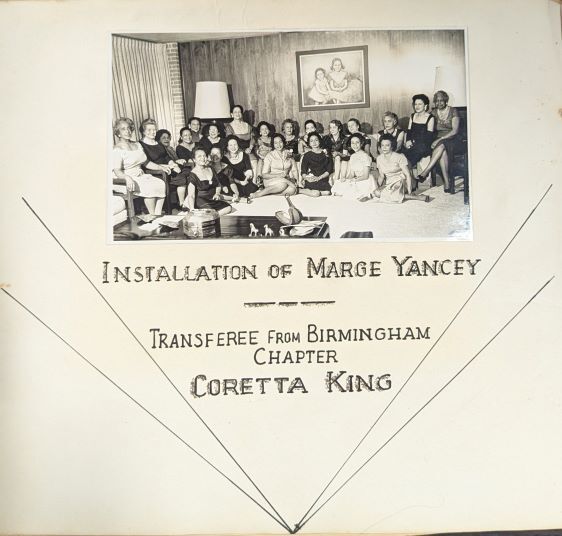
Scrapbook page from the 1961–1962 records of the The Links, Incorporated, Atlanta Chapter, featuring a group photograph of chapter members gathered for a chapter event. The page notes the installation of Marge Yancey and the transfer of Coretta Scott King from the Birmingham chapter to the Atlanta chapter.
The photograph shows members seated and standing together in a living room setting, reflecting the social and civic fellowship that characterized the organization’s gatherings. The inclusion of Coretta Scott King highlights the close connections between professional women’s organizations like The Links and the broader civil rights leadership community in Atlanta during the early 1960s.
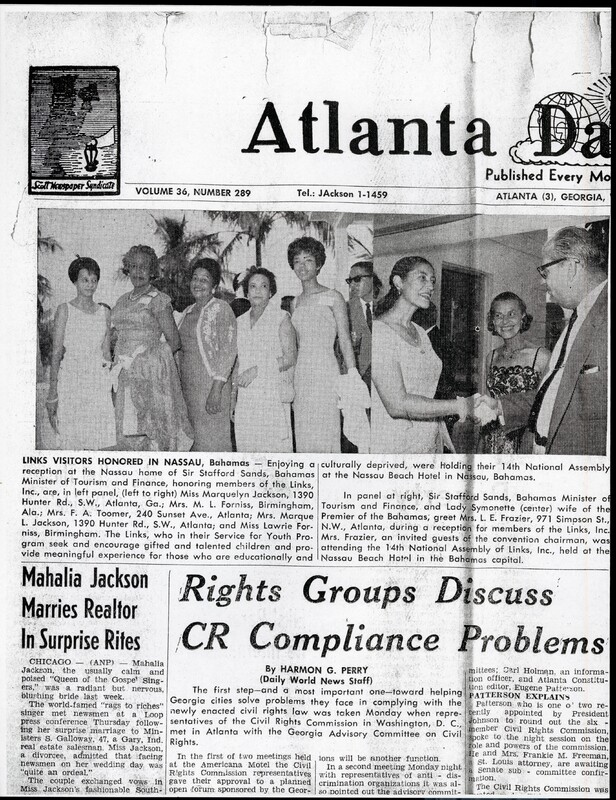
Newspaper clipping from the Atlanta Daily World reporting on members of The Links, Incorporated attending a reception in Nassau, Bahamas, during the organization’s 14th National Assembly in 1964. The article includes photographs of visiting members and describes a reception held at the home of Sir Stafford Sands, who welcomed members of the organization.
Among those mentioned is Atlanta Links member Mrs. L. E. Frazier, who attended the assembly and reception. The event highlights the international reach and influence of The Links during the mid-twentieth century, as members engaged in cultural exchange, civic leadership, and social events beyond the United States.
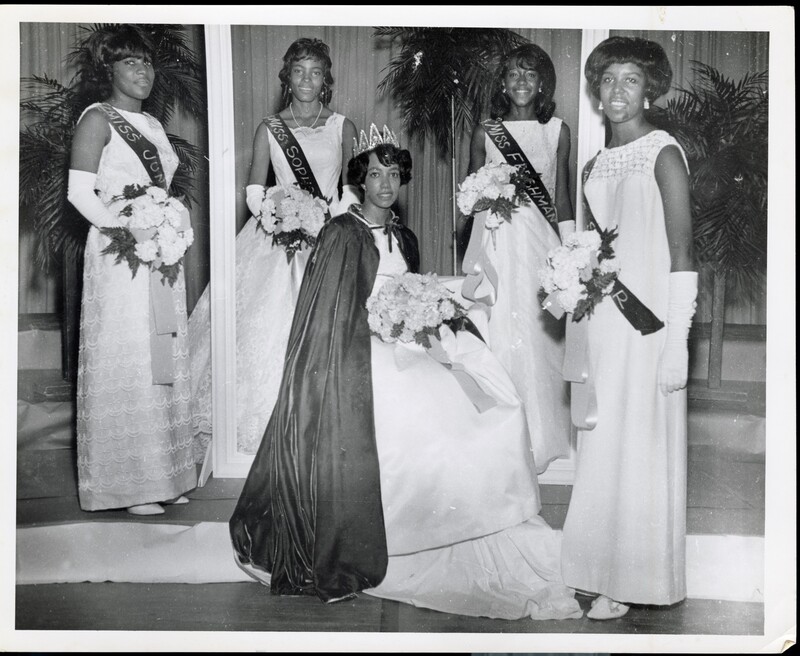
Photograph of a group of African American teenage girls participating in a school pageant, circa 1960s. The young women wear formal gowns, gloves, and pageant sashes while holding bouquets. At center, a crowned participant sits wearing a cape and holding flowers, surrounded by other contestants. The image reflects the pageantry, celebration of beauty, and ceremonial traditions that highlighted confidence, accomplishment, and community pride among African American youth during the mid-twentieth century.
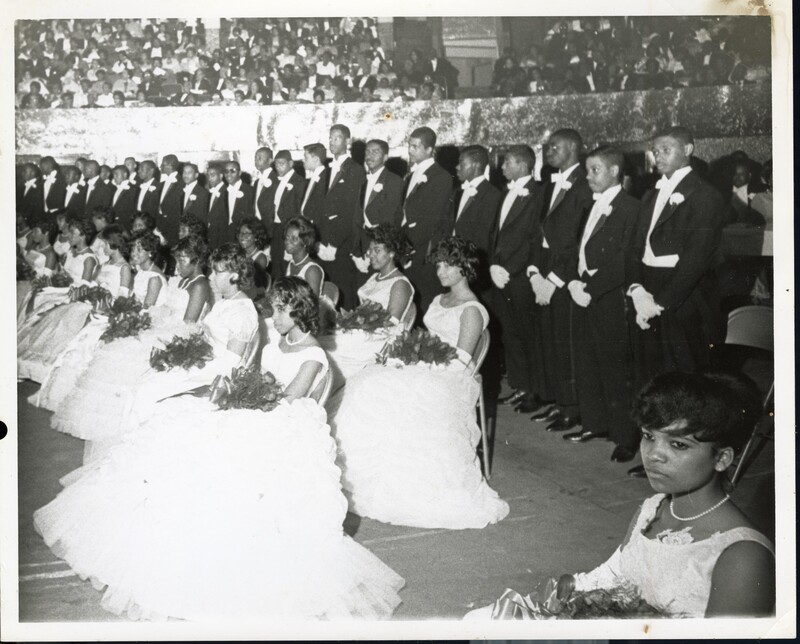
Photograph of a debutante presentation ceremony hosted by Sigma Gamma Rho Sorority, circa 1960. Young African American debutantes in formal gowns are seated in the foreground holding bouquets, while their escorts stand behind them in tuxedos and white gloves. The ceremony takes place before a large audience, reflecting the pageantry, mentorship, and community celebration associated with debutante traditions within African American social and civic organizations.
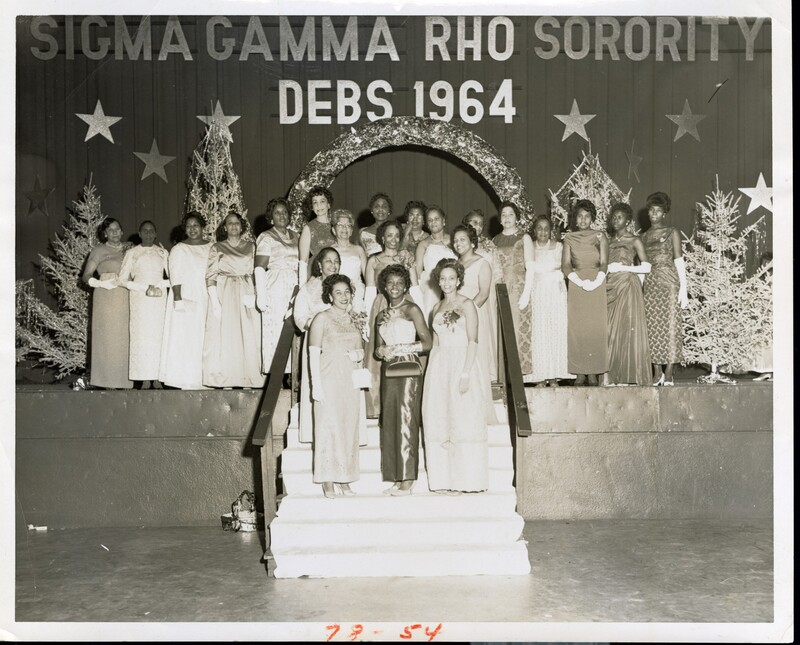
Group photograph of members of the Eta Sigma Chapter of Sigma Gamma Rho Sorority during the 1964 Debutante Ball. The women are arranged on a decorated stage beneath a banner reading “Sigma Gamma Rho Sorority Debs 1964,” dressed in formal evening gowns and gloves. Soror Evelyn Hood stands in the front row (left) beside a debutante ball planning committee members. The image reflects the ceremonial elegance and mentorship traditions through which African American women’s organizations supported the presentation and development of young women.
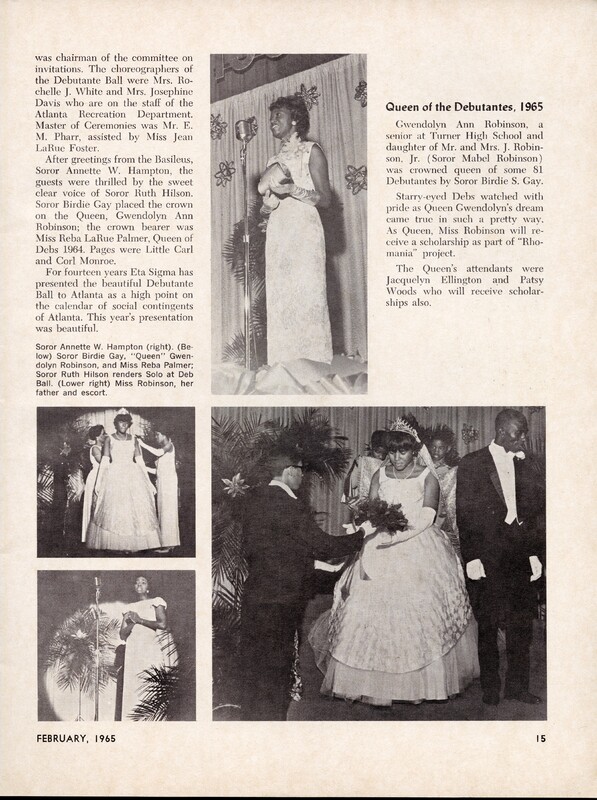
Magazine article from The Aurora (February 1965) featuring photographs from the Eta Sigma Chapter of Sigma Gamma Rho Sorority’s 1964 debutante ball. The images show the crowning of the “Queen of the Debutantes,” Gwendolyn Ann Robinson, and other young African American women participating in the formal presentation ceremony.
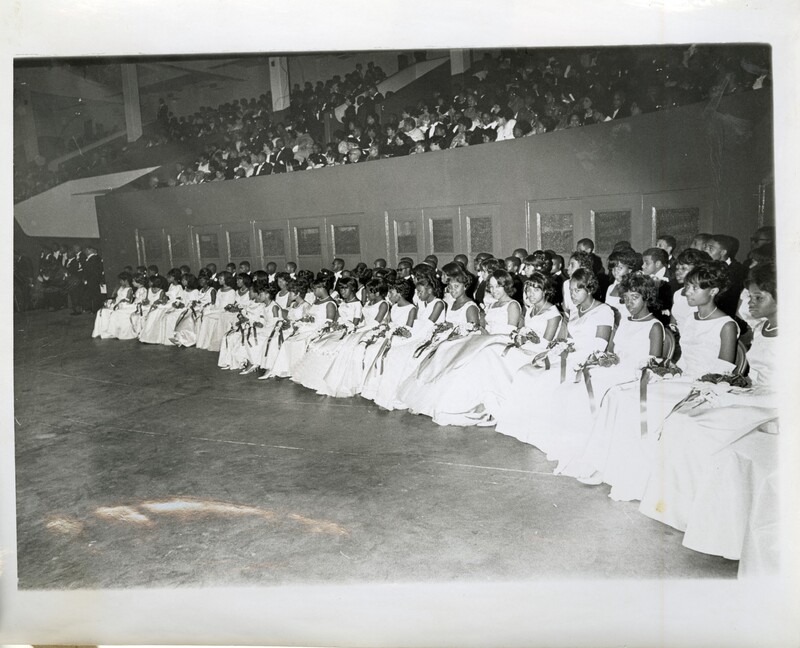
Black-and-white photograph of young African American women seated in a long row wearing formal white gowns and holding bouquets during the Eta Sigma Chapter of Sigma Gamma Rho Sorority debutante ball, 1967. The debutantes sit before a large audience gathered in a balcony and main floor, highlighting the scale and significance of the formal presentation ceremony.
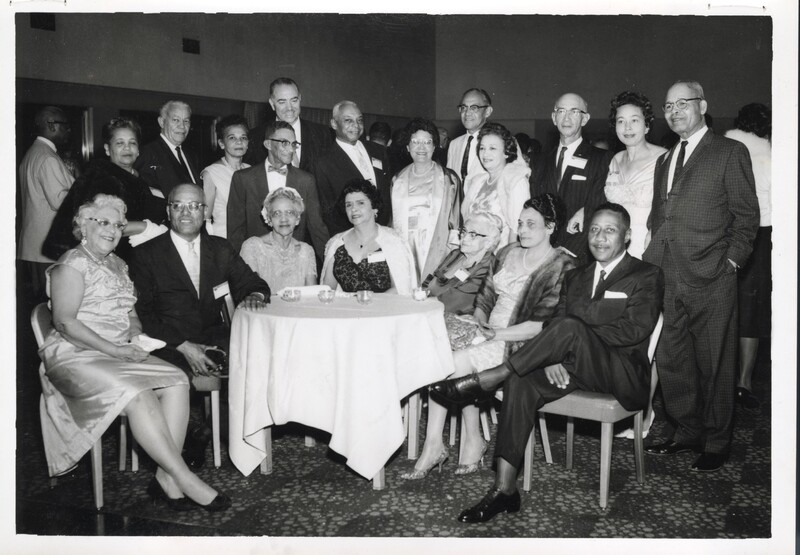
Black-and-white photograph of Dr. Henry Butler Jr. and Mrs. Rheba Butler seated with a group of formally dressed guests at a social gathering or reception, 1962.