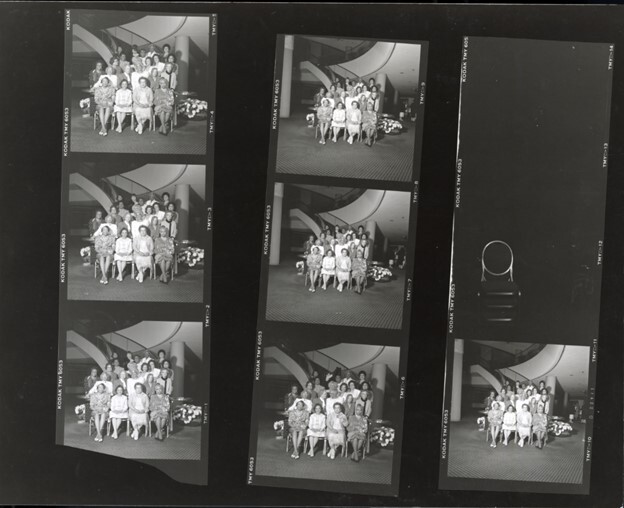
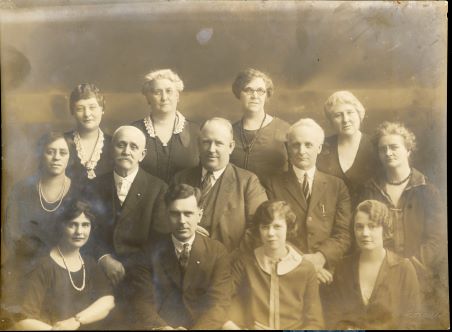
These uncut negatives preserve the Utopian Literary Club in the act of continuing. Long after its founding decades, the club still gathered women around books, programs, memory, and mutual regard. The repeated frames suggest something quietly powerful: a group making sure its presence was recorded, not as a relic of an earlier era, but as a living tradition still worthy of the camera.
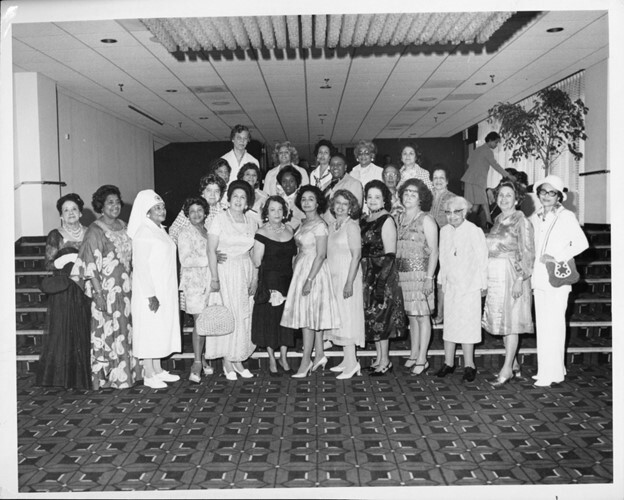
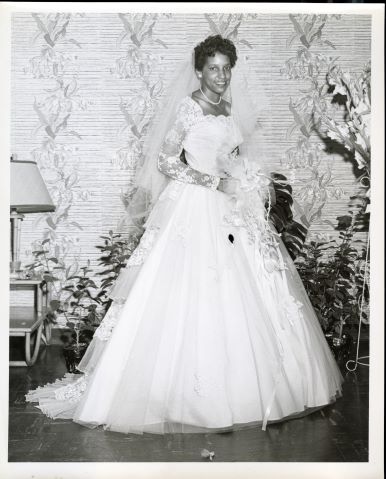
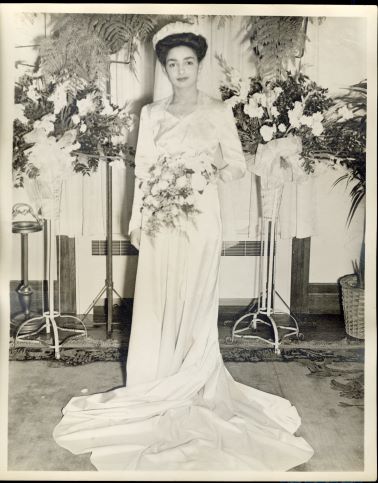
At the Utopian Literary Club’s 60th anniversary, members dressed in tribute to the decades their organization had lived through. The choice was more than festive; it turned fashion into a timeline of Black women’s endurance, taste, memory, and imagination. By honoring the club’s past through clothing, these women celebrated not only how long Utopian had lasted, but how beautifully it had carried its history forward.
A woman identified as Dean Jean Fairfax sits confidently at her desk in an office setting, likely photographed in 1945 for the yearbook at The Tuskegee Institute. Dressed in a tailored suit with neatly styled hair, she appears composed and professional while surrounded by papers and office materials. The image captures a balance of elegance and authority, reflecting the intellectual labor, leadership, and determination women carried into professional spaces while still maintaining grace and self-possession.
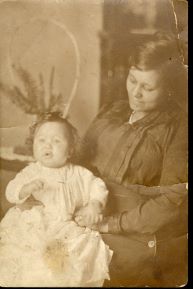
A young mother sits holding her infant child in a softly lit studio portrait, likely dating to the 1920s. The mother gazes downward with a calm, attentive expression while the baby looks outward toward the camera. The intimate composition highlights the tenderness of motherhood while also reflecting the quiet endurance, care, and emotional strength required to nurture and protect family during the early twentieth century.
Two African American women stand outdoors beside a tennis racket, dressed in fashionable light-colored dresses and accessories, likely dating to the 1920s. Their poised stance, stylish presentation, and relaxed companionship capture a moment of leisure, confidence, and everyday elegance. The photograph reflects the quiet beauty of Black social life and the importance of recreation, friendship, and self-expression during the early twentieth century.