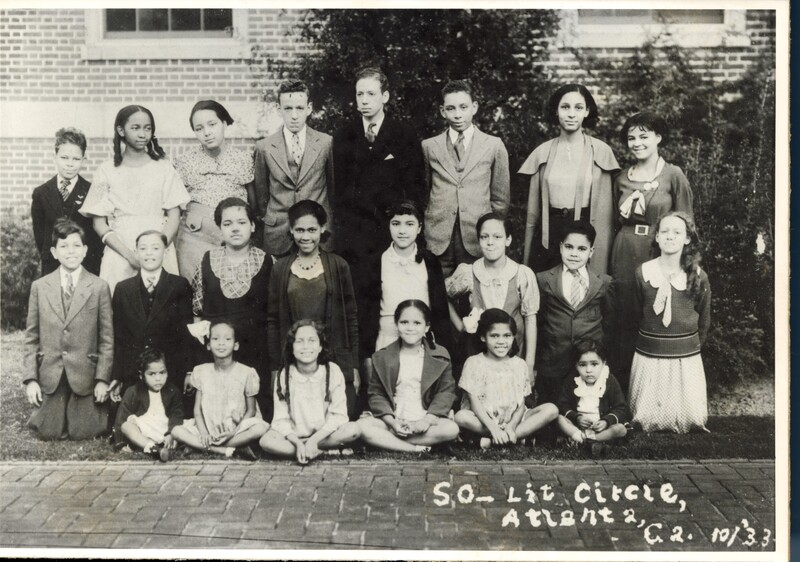
Group photograph of members of the Soc-Lit (Social–Literary) Circle in Atlanta, Georgia, dated October 1933. The image shows a large group of children and adolescents arranged in three rows outdoors in front of a brick building. The group includes boys and girls dressed in formal or semi-formal clothing typical of the early 1930s, including suits, dresses, and hair bows.
Anne Thomas, identified in the caption data as having long curls, appears in the back row, second from the left. Social and literary circles such as this were common community and youth organizations in African American communities during the early twentieth century. These groups often fostered reading, public speaking, social development, and intellectual engagement among young people. The photograph documents youth participation in organized educational and cultural activities in Atlanta during the Great Depression era.
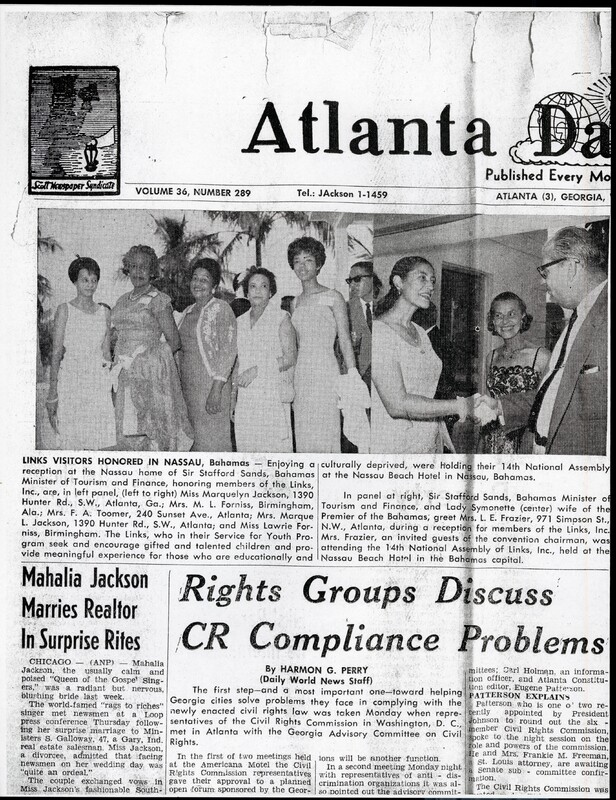
Newspaper clipping from the Atlanta Daily World reporting on members of The Links, Incorporated attending a reception in Nassau, Bahamas, during the organization’s 14th National Assembly in 1964. The article includes photographs of visiting members and describes a reception held at the home of Sir Stafford Sands, who welcomed members of the organization.
Among those mentioned is Atlanta Links member Mrs. L. E. Frazier, who attended the assembly and reception. The event highlights the international reach and influence of The Links during the mid-twentieth century, as members engaged in cultural exchange, civic leadership, and social events beyond the United States.
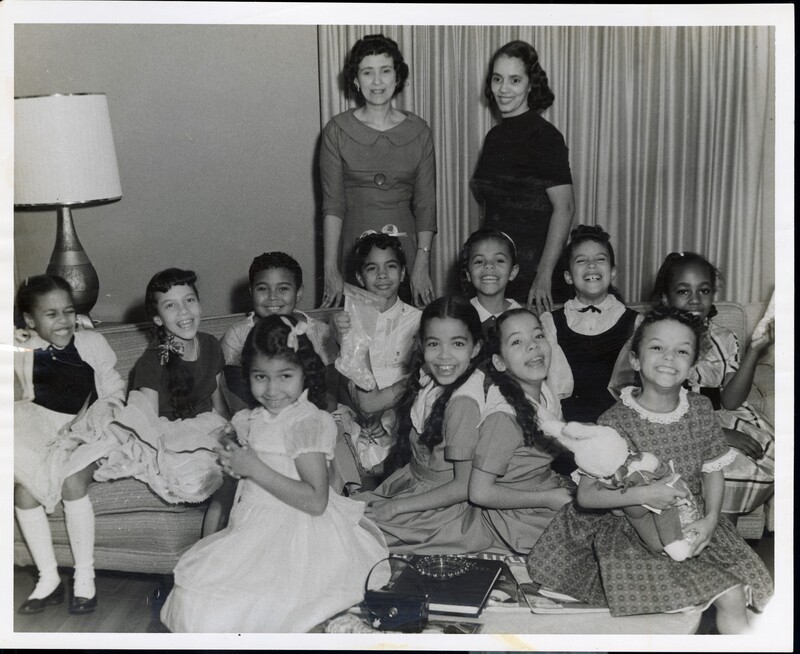
Photograph of a group of young girls gathered indoors with two adult women, taken around the 1950s. In the front row, center, are Caren and Carolyn Yancey, daughters of Asa G. Yancey Sr.. The girls are identified as members of “Jack and Jill of America,” a national organization that supports leadership development, cultural awareness, and social engagement for African American children.
The children sit and stand closely together on a sofa and floor, smiling toward the camera, some holding dolls or toys. Two adult women stand behind them, likely supervising the gathering. The setting appears to be a living room, suggesting a social or educational activity organized through the Jack and Jill chapter. The image captures the importance of community networks that nurtured friendship, cultural pride, and leadership among African American youth during the mid-twentieth century.
Photograph of two members of The Links, Incorporated, Atlanta Chapter, speaking together at a podium during the Benjamin E. Mays Banquet in the 1950s. The women stand close to a microphone, appearing to exchange remarks or present an award. Floral arrangements and banquet tables are visible in the foreground, while other attendees sit nearby.
The event honored Benjamin E. Mays, a prominent leader in African American education and civil rights. The image reflects the role of The Links in supporting educational initiatives, civic engagement, and community leadership within Atlanta’s Black professional community during the mid-twentieth century.
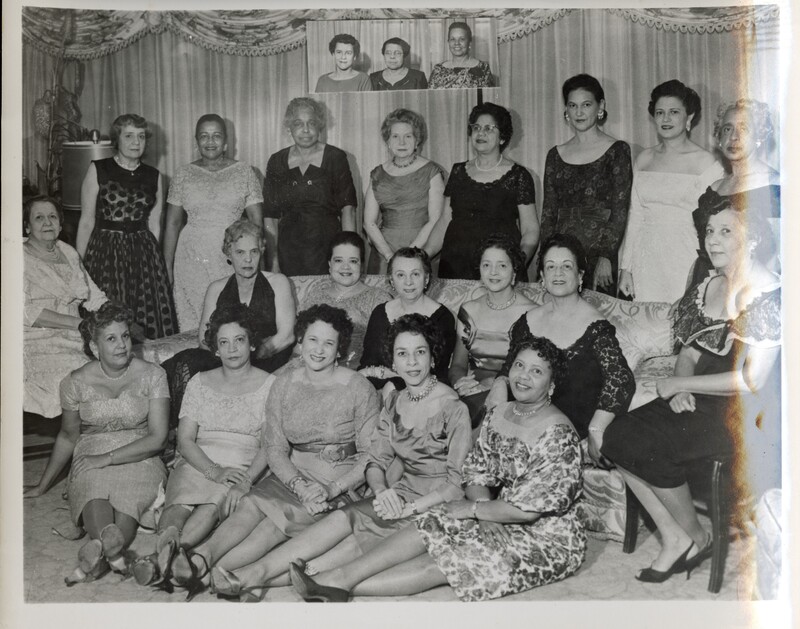
Group portrait of members of the The Links, Incorporated, Atlanta Chapter, photographed during a formal gathering in the 1950s. The women are arranged in several rows in a living room setting, seated on the floor and sofa while others stand behind them. Dressed in elegant evening gowns and cocktail dresses, they present a composed and celebratory image of fellowship and civic leadership.
Founded in 1946, The Links is a national organization of African American professional women dedicated to community service, cultural enrichment, and civic engagement. Photographs like this one document the strong networks of friendship and mutual support that characterized the organization’s early decades, particularly among women leaders in Atlanta’s civic and cultural life.
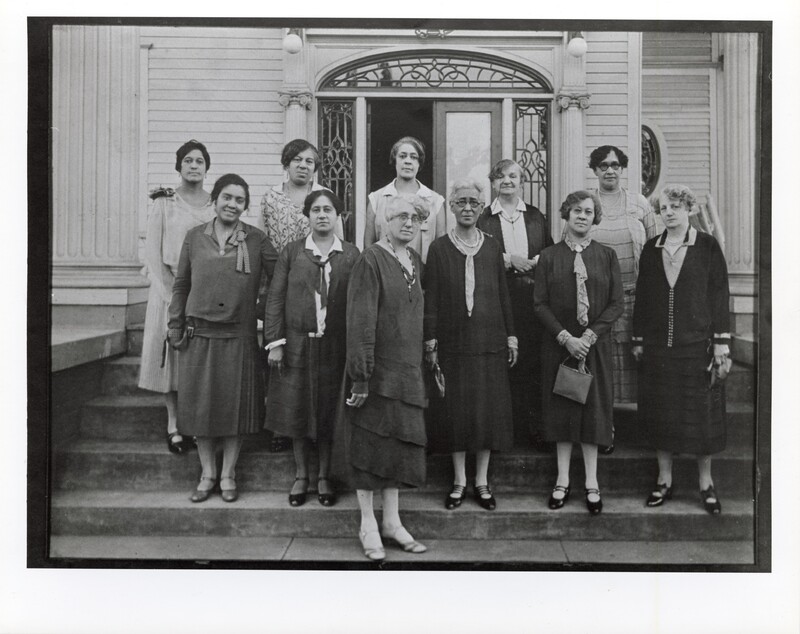
Group portrait of African American clubwomen gathered outside a building in the 1920s. The photograph includes prominent civic leaders Lugenia Burns Hope, seated in the front row center, and Selena Sloan Butler standing to her right. The women are dressed in tailored dresses, coats, and hats typical of the period, reflecting the dignity and professionalism of Black women engaged in community leadership.
Images like this document the powerful networks of African American clubwomen who organized for education, social reform, and community uplift during the early twentieth century. Their collective efforts shaped civic institutions, expanded opportunities for Black families, and strengthened movements for racial advancement across the United States.