Items

Tag Softness
View as:
Madeleine Berthelot, 1946
Series of photographs of Madeleine Berthelot taken during a visit to the French Riviera in May 1946. The images show Berthelot posing in front of prominent locations including the Hotel Ruhl in Nice, the Promenade des Anglais, and the Hotel Martinez in Cannes. Her tailored coat, handbag, and composed stance reflect postwar fashion and the culture of travel along the Mediterranean coast in the immediate aftermath of World War II.
Lucille V. Hill (nee King), Tuskegee Institute, 1945
Yearbook portrait of Lucille V. Hill (née King), identified as “Cille,” a nursing education student at Tuskegee Institute, 1945. The accompanying yearbook text notes her hometown of Thomaston, Georgia, and lists several campus activities and organizations, reflecting the active student life and professional training available to Black women at Tuskegee during the 1940s.
Gwendolyn Yvonne Cooper
Photograph of Gwendolyn Yvonne Cooper walking along a residential path, 1943. Cooper wears a tailored jacket and pleated skirt typical of early-1940s fashion. The neatly maintained garden, tree with birdhouse, and quiet neighborhood homes evoke a sense of everyday life and domestic calm during the wartime era. The image captures a moment of youthful confidence and ordinary beauty within a mid-20th-century Black residential landscape.
Gloria L. Smith (left) Miss Black America and Reda Wyatt (right) Miss Atlanta NAACP at Paschal Brothers Motel
Photograph of Gloria L. Smith (left), Miss Black America, and Reda Wyatt (right), Miss Atlanta NAACP, standing outside the Paschal Brothers Motel in Atlanta, Georgia, October 19, 1969. Both women are dressed in late-1960s fashion, with Wyatt gesturing in the distance. The Paschal Brothers Motel was an important gathering place for African American civic leaders during the Civil Rights era. Photograph by Harmon Perry.
Four 1940 Spelman Graduates Head Procession from Sisters Chapel
Photograph showing four graduating students from Spelman College leading a commencement procession from Sisters Chapel, circa 1940. The students walk together carrying a banner bearing the college emblem while other participants stand along the pathway observing the ceremony. The procession moves beneath a wooden arch on the college grounds, framed by trees and landscaped lawns. The students wear light-colored dresses typical of formal collegiate ceremonies of the period. Processions such as this were a traditional part of commencement exercises at Spelman College, marking the formal transition of students from academic study to professional and civic life. Founded in 1881, Spelman College has long been one of the nation’s leading historically Black colleges for women, educating generations of African American leaders in education, public service, and the arts.
Florie Trice and Martha Greer Bentley
Photograph of Florie Trice and Martha Greer Bentley during an event associated with the National Conclave of Grady Graduate Nurses, taken in 1965. The image shows Martha Greer Bentley standing and signing a document on a table while Florie Trice sits nearby observing the moment. A man stands behind the table, leaning forward to watch the signing. Floral arrangements and formal attire suggest the occasion was part of a ceremonial or organizational gathering. The photograph documents the professional and social activities of African American nurses connected with the Grady Graduate Nurses organization. Professional nursing associations such as this played an important role in supporting Black medical professionals during the twentieth century, providing networks for professional advancement, leadership development, and community service during a period when opportunities in many medical institutions remained limited by racial discrimination.
Carolyn Fouch Walker (granddaughter of Ruby Blackburn) holding paper with Gov. Herman Talmadge at YMCA, undated
Photograph of Carolyn Fouch Walker, granddaughter of Ruby Blackburn, standing with Herman Talmadge at a YMCA (Young Men's Christian Association) event, circa the early 1960s. Walker holds a document while speaking with Talmadge, who served as governor of Georgia from 1948 to 1955 and later as a United States senator. The scene appears to take place inside a YMCA facility, indicated by the banner visible in the background reading “Young Men’s Christian Association.” A microphone stand and trophy placed nearby suggest the occasion may have been part of a ceremony, youth program, or recognition event. Walker is dressed in formal attire and appears to be receiving or presenting a document during the event. The photograph documents a moment of civic engagement and community programming involving local organizations and public officials during the early 1960s.
Francis Fouch (Ruby Blackburn's daughter) and group at tea, undated
Photograph of Francis Fouch, daughter of Ruby Blackburn, standing with a group of women at a social tea gathering, circa the late 1940s. The women are dressed in formal attire typical of the period, including dark dresses, jewelry, and styled hair, reflecting the elegance and social customs of mid-twentieth-century African American community gatherings. The group stands indoors behind a table set with a teapot, serving pieces, and pastries, suggesting a formal tea or social reception. Francis Fouch appears among the group alongside Hattie Holmes and other attendees. Such gatherings were important social spaces within African American communities, providing opportunities for fellowship, networking, and civic engagement.
Big Bethel A.M.E. Church Concert Choir, 1947
Photograph of the concert choir of Big Bethel A.M.E. Church in Atlanta, Georgia, taken on July 21, 1947. The group is assembled inside the church sanctuary, posed in several rows in front of the large pipe organ. Members of the choir wear coordinated attire—white blouses paired with long dark skirts—reflecting the formal presentation typical of church concert choirs during the mid-twentieth century. The choir was directed by H. J. Furlow, who served as the ensemble’s musical leader at the time. Big Bethel A.M.E. Church, one of Atlanta’s oldest and most historically significant African American congregations, has long been known for its strong musical tradition and community programming. Concert choirs such as this played a central role in worship services, musical programs, and special events, helping to cultivate sacred music traditions and communal fellowship within the church.
Nannie Burroughs presents flowers to MacBeth star Edna Thomas
Photograph showing educator and activist Nannie Helen Burroughs presenting a large floral arrangement to stage and film actress Edna Thomas following a performance of MacBeth, circa 1936. Thomas, an Atlanta-born performer known for her work in theater and early American film, stands near the center of the image receiving the bouquet. Other individuals identified in the photograph (from left to right) include Mrs. U. R. McDodana, Jesse O. Thomas, Samuel Houston, and John Silvera, who appears in the background. The group is gathered indoors, dressed in formal attire typical of the mid-1930s. The image documents a moment of recognition celebrating the achievements of an African American performer during a period when Black artists and intellectuals were expanding their presence in American theater, film, and cultural life despite the limitations imposed by segregation. The photograph forms part of the Jesse O. Thomas papers.
Elsie A. Cuff, 1936
Portrait photograph of Elsie A. Cuff taken in 1936 while she was a student at Virginia State College (now Virginia State University). The image shows Cuff posed against a studio backdrop, wearing a dark blouse with a rounded collar. Her hairstyle and clothing reflect the fashion of the mid-1930s. Studio portraits such as this were commonly produced for school records, yearbooks, or personal keepsakes during the early twentieth century. The photograph preserves the likeness of a young African American college student during a period when historically Black colleges and universities played a vital role in expanding educational opportunities and professional pathways for Black Americans. The photograph is part of the Jesse O. Thomas papers.
Unidentified woman in fur coat, undated
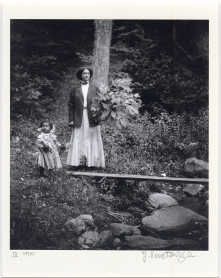
Sepia-toned photograph of an unidentified woman standing outdoors near a wooden structure, likely a porch or small building. She is dressed in a long coat with a fur collar and holds what appears to be a fur muff, accessories commonly associated with winter fashion during the late 1920s and early 1930s. Her clothing and posture suggest a posed snapshot taken during colder weather. The photograph reflects everyday life and personal style during the early twentieth century. Images such as this often appeared in family albums or scrapbooks, preserving informal moments and individual portraits outside the studio setting.
Antique Photographs: Alice, undated
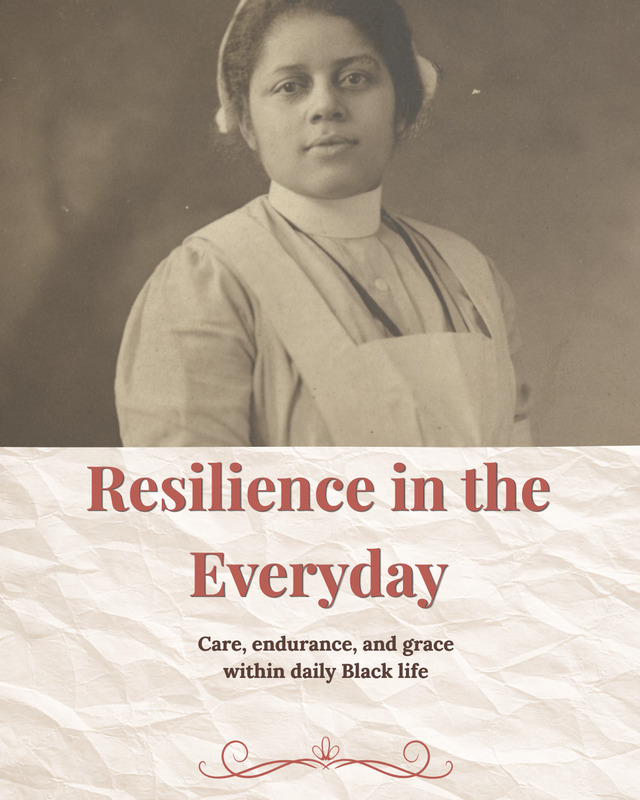
Sepia-toned studio portrait of a young woman identified as Alice, dating to approximately 1927–1930. She stands facing the camera against a plain studio backdrop, wearing a light-colored dress with a white apron and cap. Her clothing suggests either domestic service attire or a work uniform commonly worn by women employed in household or hospitality roles during the early twentieth century. The portrait reflects the conventions of studio photography of the period, in which individuals posed formally to create keepsake images for family members and personal collections. Images such as this document the lives and labor of African American women during the early twentieth century, preserving individual identity and presence within family and community histories. The photograph is part of the William and Mary Jackson Collection.
Unidentified group sitting at table, undated
Black-and-white photograph showing a group of men and women seated together at a long dining table during a social gathering, dating to approximately 1919–1922. The individuals are dressed in formal attire typical of the early twentieth century, suggesting a special occasion such as a banquet, club meeting, or celebratory event. The table is decorated with a tall centerpiece, and the room is adorned with streamers and other festive decorations. The image captures a moment of community life and social fellowship, reflecting the importance of gatherings, clubs, and communal meals within African American communities during the early twentieth century. The photograph is part of the Mabel Vernon Alford Collection and is preserved at the Auburn Avenue Research Library on African American Culture and History, part of the Fulton County Library System.
Unidentified group of women smelling flowers, undated
Sepia-toned photograph of a group of young women gathered around a flowering bush, smiling and smelling the blossoms. The women lean over the flowers and appear relaxed and playful, suggesting a candid moment captured outdoors beside a brick building. Their hairstyles and clothing—loose dresses, jackets, and waved or bobbed hair—reflect early twentieth-century fashion. The image offers a glimpse of leisure and friendship among young African American women during the late 1910s or early 1920s. Informal photographs like this often documented everyday moments shared among friends and family, preserving scenes of social life, beauty, and joy within community settings. The photograph is part of the Mabel Vernon Alford Collection.
Group Photo of School Girls
Group portrait of African American schoolgirls photographed in the 1920s. The students are arranged in three rows against a studio backdrop, wearing dresses typical of the period, including garments with sailor collars, pleated skirts, and patterned fabrics. Their hairstyles and clothing reflect the fashion of young women and girls during the early twentieth century. Photographs such as this often documented school classes, clubs, or student groups and were commonly preserved in family albums and community collections. The image reflects the importance of education within African American communities during the early twentieth century and provides a glimpse into the lives of young students during the 1920s.
Unidentified woman next to car, undated
Photograph of an unidentified woman standing beside an automobile on a city street, dating to approximately 1928–1932. The woman wears a cloche-style hat and a tailored coat typical of late 1920s and early 1930s fashion. Two children stand nearby, one leaning against the automobile while another stands slightly behind her. In the background, multi-story buildings, fire escapes, and other automobiles line the street, situating the scene within an urban neighborhood. Images such as this offer glimpses of everyday life during the early twentieth century, documenting fashion, family relationships, and the growing presence of automobiles in city environments. The photograph comes from the Williams family scrapbook and reflects the kinds of informal snapshots families preserved to record daily experiences and community life.
Unidentified Woman at The Regent, undated
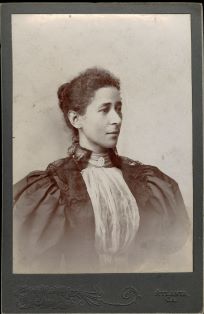
Studio portrait of an unidentified woman seated beside a decorative chair, photographed at The Regent studio operated by J.E. Purdy & Co.. The woman wears an elaborately patterned dress with a fitted bodice, lace collar, and ornamental hat typical of late nineteenth-century fashion. Her formal pose, jewelry, and carefully styled attire reflect the conventions of studio portraiture during the 1890s, when photographic portraits served as important personal and family keepsakes. The cabinet card photograph comes from the Selena Sloan Butler papers. While the woman’s identity has not been confirmed, she may be a relative of Selena Sloan Butler, though this attribution remains unverified.
Photograph: Asa G. Yancey's Daughters Caren & Carolyn, undated
Photograph of a group of young girls gathered indoors with two adult women, taken around the 1950s. In the front row, center, are Caren and Carolyn Yancey, daughters of Asa G. Yancey Sr.. The girls are identified as members of “Jack and Jill of America,” a national organization that supports leadership development, cultural awareness, and social engagement for African American children. The children sit and stand closely together on a sofa and floor, smiling toward the camera, some holding dolls or toys. Two adult women stand behind them, likely supervising the gathering. The setting appears to be a living room, suggesting a social or educational activity organized through the Jack and Jill chapter. The image captures the importance of community networks that nurtured friendship, cultural pride, and leadership among African American youth during the mid-twentieth century.
Two Atlanta Links Members at Benjiman E. Mays Banquet
Photograph of two members of The Links, Incorporated, Atlanta Chapter, speaking together at a podium during the Benjamin E. Mays Banquet in the 1950s. The women stand close to a microphone, appearing to exchange remarks or present an award. Floral arrangements and banquet tables are visible in the foreground, while other attendees sit nearby. The event honored Benjamin E. Mays, a prominent leader in African American education and civil rights. The image reflects the role of The Links in supporting educational initiatives, civic engagement, and community leadership within Atlanta’s Black professional community during the mid-twentieth century.
Elliot Travis's Twins, Laura & Louise at Delta Pro [Delta Sigma Theta Sorority], West Virginia State College
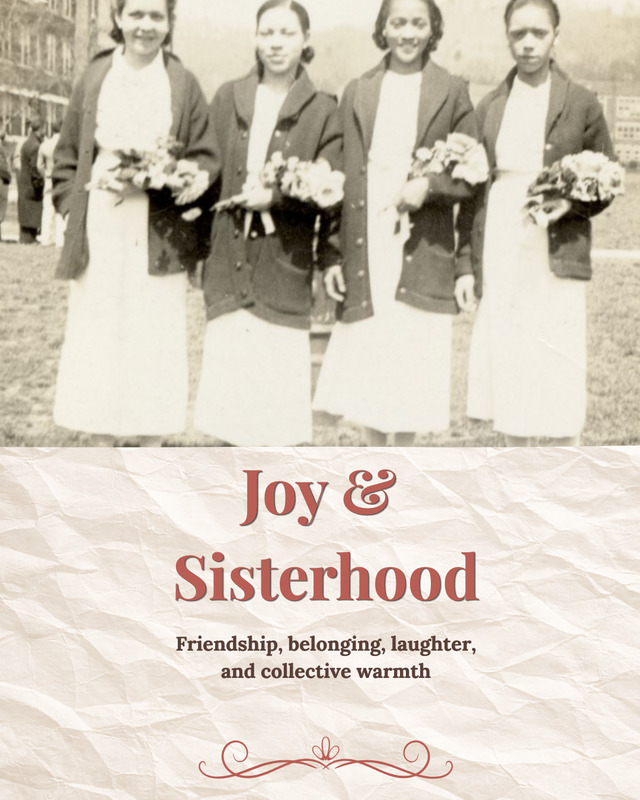
Outdoor photograph of twins Laura and Louise Travis, students at West Virginia State College, standing side by side during Delta Pro activities in 1936. The young women are dressed in long coats over light-colored dresses and each holds a small bouquet of flowers, indicating their participation as new probationary members (“Delta Pro”) of Delta Sigma Theta Sorority. The sisters pose together on the campus lawn with college buildings and hills visible in the distance. Their matching posture and similar attire highlight both their twin relationship and the sense of unity associated with sorority initiation traditions. The photograph reflects moments of friendship, sisterhood, and collegiate life among African American women during the 1930s.
Miss West Virginia & Court
Outdoor portrait of three young African American women seated together on a stone bench in front of a brick school building in 1936. The women are identified as members of the Miss West Virginia court: Eddie Mae Stubbs (left), Dot Bradshaw (center, Miss West Virginia), and Violet Burks (right). They sit close together, smiling toward the camera, dressed in fashionable mid-1930s dresses with softly waved hairstyles typical of the period. The photograph captures a moment of camaraderie and pride among the young women during a community pageant event. Informal yet composed, the image reflects the social networks and celebratory traditions that brought young Black women together through school, community events, and local recognition.
Nell Thomas & Anne Braxton
Hand-tinted studio portrait of an African American family group taken around 1930. Nell Thomas sits in the center, surrounded by four young women, including her daughter Anne Braxton, who stands third from the left. The women wear light-colored dresses typical of the late 1920s and early 1930s, and the photograph has been delicately hand-colored to highlight their clothing and skin tones. The carefully posed composition and decorative studio mount reflect the importance of family portraiture within African American communities. Images like this celebrated kinship, pride, and generational connection, preserving moments of unity and affection across mothers and daughters.
Margaret Bowen with other Alpha Kappa Alpha Members, University of Cincinnati, 1922
Group portrait of African American women affiliated with the Alpha Kappa Alpha Sorority, Inc. at the University of Cincinnati in 1922. The photograph includes Margaret Bowen (front row, left) seated among fellow members of the Omicron Chapter. The women are arranged in a studio setting, seated and standing around a small table, dressed in fashionable early-1920s attire including tailored dresses, necklaces, and carefully styled hair. The portrait reflects the importance of Black sororities as spaces of sisterhood, scholarship, and leadership for African American women in higher education during the early twentieth century. Through organizations like Alpha Kappa Alpha, college-educated Black women built networks of mutual support while advancing academic achievement, civic engagement, and community uplift.
Lugenia Burns Hope and Georgia Club Women
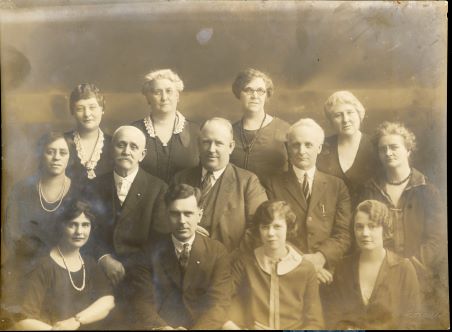
Group portrait of African American clubwomen gathered outside a building in the 1920s. The photograph includes prominent civic leaders Lugenia Burns Hope, seated in the front row center, and Selena Sloan Butler standing to her right. The women are dressed in tailored dresses, coats, and hats typical of the period, reflecting the dignity and professionalism of Black women engaged in community leadership. Images like this document the powerful networks of African American clubwomen who organized for education, social reform, and community uplift during the early twentieth century. Their collective efforts shaped civic institutions, expanded opportunities for Black families, and strengthened movements for racial advancement across the United States.