
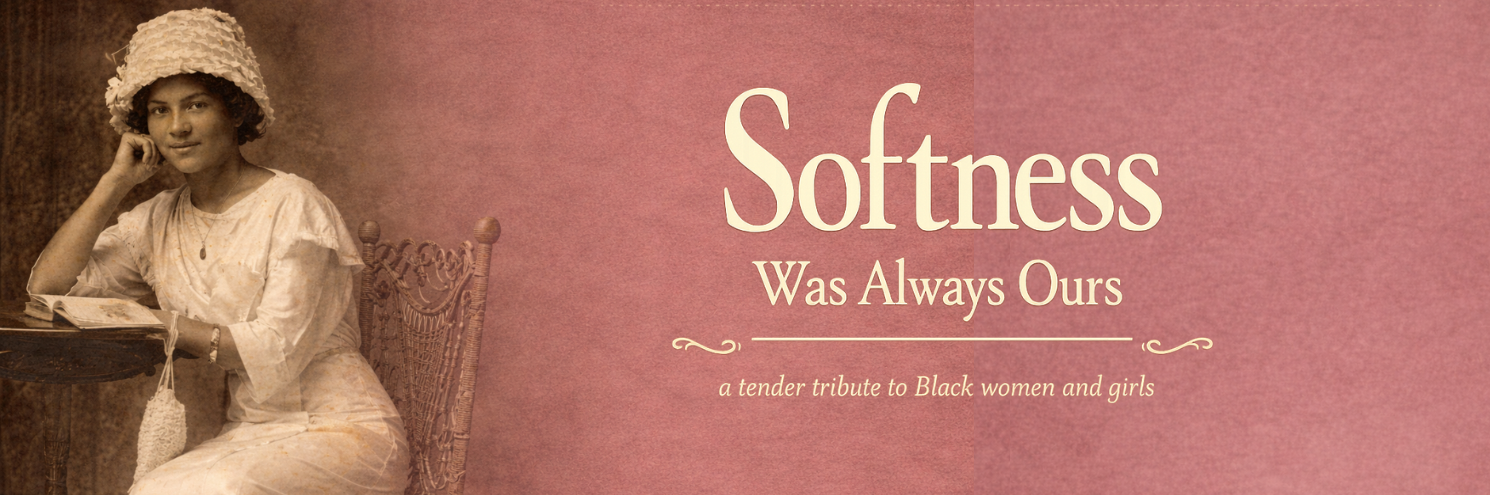
Welcome to Softness Was Always Ours
This exhibit invites visitors to slow down and encounter how Black women and girls have been seen, remembered, styled, and represented across generations.
Rather than treating softness as fragility, Softness Was Always Ours approaches it as a form of presence, self-possession, beauty, care, leisure, tenderness, and quiet power.
The pages that follow bring together photographs, printed materials, and archival objects from collections across the Auburn Avenue Research Library to trace these expressions from the 1880s through the 1980s.
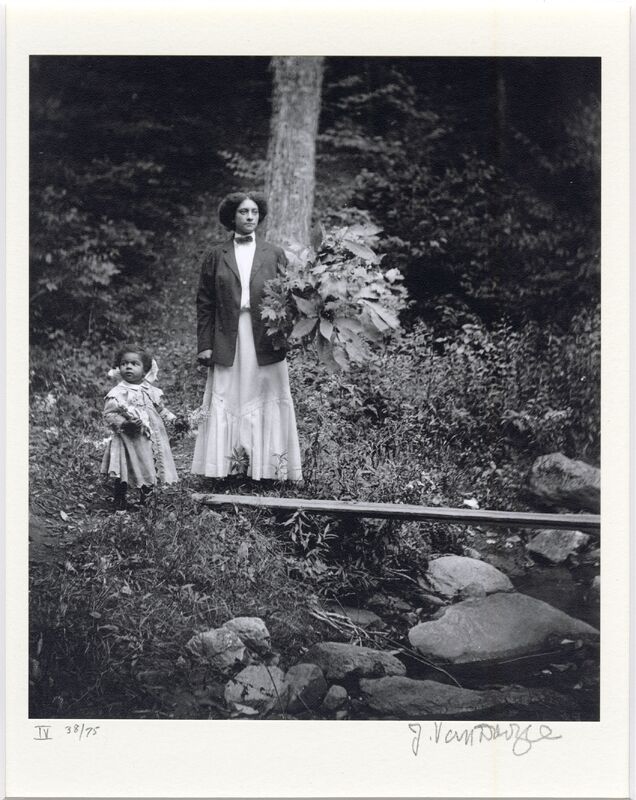
Photo credit: James Van Der Zee.
A woman and small girl gather together in a wooded landscape, framed by water, stone, and towering trees. This scene illustrates softness not as fragility, but as presence, care, stillness, and the freedom to exist gently within the world.
What “Softness” Means Here
Within this exhibit, softness does not mean weakness.
It reflects the many ways Black women and girls cultivated beauty, tenderness, leisure, creativity, dignity, intimacy, and self-expression across generations.
Some images document quiet domestic moments. Others capture elegance, friendship, celebration, education, spirituality, romance, athleticism, or artistic achievement.
Together, they reveal how softness and resilience have long existed side by side.
What to Notice
As you move through the exhibit, consider:
How beauty, leisure, tenderness, and self-presentation appear across generations.
The ways Black women and girls created softness even within restrictive social conditions.
Gestures of care, friendship, elegance, romance, rest, and community.
How clothing, photography, posture, and environment communicate identity and dignity.
The relationship between visibility, memory, and archival preservation.
Moments of joy and quiet self-expression that challenge narrow historical narratives.
There is no single way to experience the exhibit. Visitors are encouraged to move slowly, follow their curiosity, and reflect on the emotional textures present throughout the collection.
Begin Exploring
Choose a path into the exhibit.